

What Do High Arches Need From an Insole?
A very high arch, sometimes called a cavus foot, can place extra pressure on the heel and ball of the foot. It may also be associated with pain or instability, according to the American College of Foot and Ankle Surgeons.
An appropriate insole can provide support and cushioning, but high arches don’t all have the same shape or flexibility. A contour that suits one person may press uncomfortably into another person’s foot.
Look for a combination of:
-
A comfortable but firm arch contour that sits in the right place beneath your foot. EVA foam material is most recommended.
-
A comfortable fit suited to your feet’ needs, including under the heel and forefoot.
-
A stable fit inside your shoe, without sliding, curling, or bunching.
-
Enough room around your foot after the insole is installed.
Our guide to support for high arches and flat feet offers more background on choosing support for different foot shapes.
What Does “Overcorrection” Feel Like?
People sometimes use “overcorrection” to describe support that feels too aggressive: the arch pushes upward, the foot feels tipped to one side, or walking feels less natural.
Those sensations don’t prove that your foot has been overcorrected. A misplaced contour, the wrong size, or insufficient shoe space can cause similar complaints. An assessment may be needed to identify what is happening.
In practical terms, watch for a hard ridge beneath your arch, a feeling that your weight has shifted uncomfortably toward one edge, or new pain when standing and walking.
The goal isn’t to force your foot onto a taller shape. It’s to find support that works comfortably with your foot. More noticeable pressure isn’t evidence that an insole is doing a better job.
Why Some Insoles Don’t Work for High Arches
Sometimes the arch contour sits too far forward or back, creating pressure instead of comfortable support. Other times, the insert takes up too much room and makes your shoes feel tight. Soft cushioning alone may not provide the support you want, while a firm contour may not suit your foot’s shape.
Start with short periods of wear, following our guide to breaking in Orange Insoles, but don’t push through sharp pain or worsening discomfort. If changing the fit doesn’t help, a podiatrist can assess whether you need a different approach.
Where Orange Insoles Fit In
For people with high arches, heel stability is another important factor to consider. A deep heel cup helps cradle the heel and contain the natural fatty tissue beneath it, supporting shock absorption and helping keep the heel stable. This added support may be especially beneficial for high arches, which can place increased pressure on the heel and sometimes contribute to instability or a tendency to shift weight toward one side of the foot.
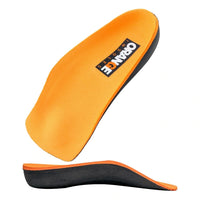
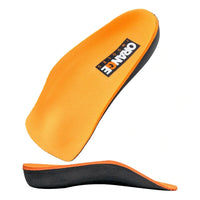
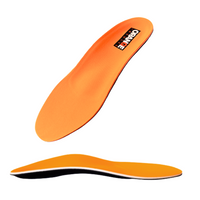
Orange Insoles incorporate supportive contours and cushioning designed to improve comfort and stability. Each style offers a different profile to accommodate various footwear needs:
-
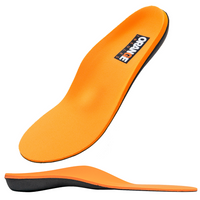
Orange Full: A full-length replacement for a removable insole, combining cushioning, a deep heel cup, medial arch support, and a metatarsal pad. Check that your shoe has sufficient room.
-
Orange Sport: A slim athletic profile with O FOAM cushioning, intended for athletic and casual footwear with a removable insole.
-
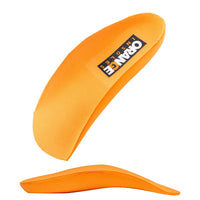
Orange Light: Orange's slimmest, lightest option, with medial arch and metatarsal support for footwear with limited space.
-
Orange 3/4: A shorter insert with heel and arch cushioning and support, intended for roomier footwear without a removable insole. It doesn't provide a full-length forefoot cushioning layer.
No model is automatically the best choice because you have high arches. The Insole Selector can help narrow the lineup by footwear needs; checking the actual fit is still essential.
How to Tell Whether an Insole Is Working for You
Try it with your usual socks and properly secured shoes. Stand and walk around, noticing where the contour contacts your foot.
A promising fit feels supportive without a concentrated pressure point. The insert stays in place, your shoes remain comfortable, and you can gradually increase wear without developing new problems.
Some awareness of a new contour can occur initially. Significant pain should not be treated as a necessary adjustment. Guy’s and St Thomas’ NHS Foundation Trust advises stopping use and contacting your podiatrist if insoles cause severe pain or aching.
When Should You Get Your High Arches Checked?
Arrange an assessment if pain persists, you repeatedly feel unstable, or your foot shape is changing. New weakness or difficulty lifting the front of your foot also needs medical attention.
High arches can have different underlying causes. A clinician can assess your foot shape, strength, and walking pattern before recommending an insert or another treatment.
Choose Comfortable Support Over Maximum Height
The best insoles for high arches should suit your feet and fit your shoes. Look beyond the height of the arch to the contour’s position, cushioning, and available shoe space.
If an insert creates pressure or makes walking more painful, reassess it. Good support should help you move more comfortably—not leave you wondering how much pain you need to tolerate.