

Pregnancy changes your body in ways that are obvious and ways that sneak up on you. Feet tend to fall into the second category. Between hormonal shifts, extra weight, and fluid retention, your feet go through a lot over nine months. The good news: understanding what's happening at each stage puts you in a great position to stay comfortable and protect your feet for the long run.
What's Actually Going On Down There
Three things work together to affect your feet during pregnancy.
First, your body starts producing relaxin (a hormone that loosens ligaments to prepare your pelvis for delivery). Relaxin doesn't stop at the pelvis. It loosens connective tissue throughout your body, including the ligaments that hold your foot's arch in place.
Second, the 25 to 35 pounds of weight gain shifts your center of gravity forward, putting more pressure on the balls of your feet. Your feet may start to pronate more (roll inward with each step), which gradually flattens your arches.
Third, your blood volume increases by nearly 50%, and that extra fluid tends to pool in your lower legs and feet. This is edema (fluid swelling), and it's the most visible change. Edema is temporary and resolves after delivery. The arch changes underneath, though, can stick around longer.
Knowing the difference between temporary swelling and longer-lasting structural shifts is what makes trimester-specific care so helpful.
First Trimester: A Head Start on Comfort
Your feet probably feel completely fine right now, which is actually why this is a great time to act. Relaxin levels are already rising, but since weight gain is minimal, your arches haven't come under real stress yet.
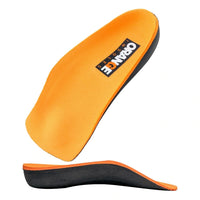
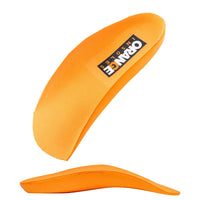
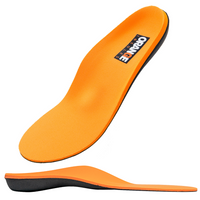
Start with arch support. A firm, structured insole in your everyday shoes holds your foot's natural arch shape while relaxin is loosening the ligaments that normally do that job. Think of it as giving your feet a little extra backup before they need it most. If you're not sure which insole fits your needs, a full-length option with a defined arch profile is a solid starting point.
Check your shoes. If your go-to pair is a flat sandal or anything without a firm heel counter (the rigid part around the back of the shoe), consider switching to something more supportive. A shoe with a low heel drop, a snug heel, and a roomy toe box sets you up well for the months ahead. If you tend toward flip-flops, it's worth knowing how they affect your feet before relying on them through pregnancy.
Key takeaway: Starting arch support early gives your feet a foundation before the real changes kick in.
Second Trimester: When Things Start to Shift
This is when many women first notice changes. Shoes that fit last month feel snug. The balls of your feet ache after a walk. Your feet may visibly roll inward.
Relaxin levels are peaking, weight gain is picking up (typically one to two pounds per week), and your arches are under real pressure. Mild edema often appears now too, especially after standing or in warm weather.
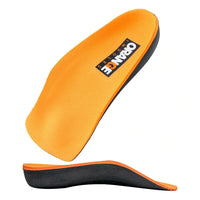
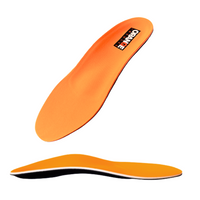
Prioritize firm arch support. You want an insole with a medial post (the firm section along the inside edge) that actively resists your foot's tendency to roll inward. Orange Insoles are built on a structured support shell that maintains its shape under load, which matters as your body weight increases.
Size up by a half size. Your feet aren't just swelling. As the arch flattens, your foot physically gets longer. Research has shown measurable increases in foot length during pregnancy, sometimes a permanent half-size gain. Giving your feet room prevents cramping a lengthening foot into a tight shoe. If you're noticing extra width too, here's how to tell if you have wide feet and what to look for in a shoe.
Try compression socks during the day. They help manage the fluid retention layer, which makes everything else feel more manageable.
Key takeaway: The second trimester is when arch support really earns its keep. Sizing up shoes now prevents discomfort as your feet lengthen.
Third Trimester: Maximum Comfort Mode
Everything intensifies in the home stretch. Swelling peaks, your arch has dropped further, and walking may feel uncomfortable by end of day. The goal now is comfort and protection.
Keep the firm arch support and add cushioning. Your insole should combine a structured base with a cushioned top layer. The base continues to support your arch; the cushioning absorbs the extra impact from your changed gait and added weight. Orange Insoles' full-length options pair these two layers so you get the benefit of their deep heel cup for stability without sacrificing comfort on top.
Wear adjustable shoes. Lace-ups or shoes with adjustable straps accommodate the swelling that fluctuates throughout the day. Your feet in the morning may be a different size than your feet at 4 PM. Adjustability makes a real difference.
Manage swelling with elevation and rest. Prop your feet above heart level for 15 to 20 minutes a few times per day. Cold water foot soaks help, and a dedicated foot recovery routine can make evenings much more comfortable.
Watch for warning signs. Sudden, severe swelling, especially in only one foot or paired with headache, vision changes, or upper abdominal pain, can indicate preeclampsia. That's a medical emergency. Contact your healthcare provider right away.
Key takeaway: The third trimester calls for firm support plus cushioning, adjustable shoes, and proactive swelling management.
After Delivery: Keep the Support Going
Swelling typically resolves within a few weeks of delivery. Arch changes and any foot lengthening, though, can take longer to stabilize.
Relaxin stays in your system for several months postpartum, and levels remain elevated longer if you're breastfeeding. That means your ligaments are still looser than usual, and your arches are still vulnerable. Continuing to wear supportive insoles during this window gives your feet the best chance to recover as fully as possible.
This isn't the time to rush back into pre-pregnancy shoes that no longer fit comfortably. Let your feet tell you what they need, and keep that arch support in place while your body finishes adjusting.
Key takeaway: Postpartum foot support matters. Your ligaments are still recovering, especially if you're breastfeeding.
Take Care of Your Feet at Every Stage
Your feet carry you through one of the most physically demanding experiences of your life. A little support at the right time goes a long way toward staying comfortable now and feeling good on your feet in the years ahead. Orange Insoles are designed to maintain their arch profile under real-world loads, which is exactly what pregnancy asks of an insole. For more on caring for your feet through all nine months, check out the Expectant Mother's Guide to Foot Health.