
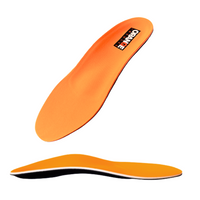

If your heels ache with every step, you already know the frustrating loop: body weight makes foot pain worse, and foot pain makes it harder to move enough to lose weight. The good news is that the connection between weight and plantar fasciitis (inflammation of the band of tissue along the bottom of your foot) is well-understood, and there are practical ways to get moving again even before the scale changes.
How Body Weight Affects Your Feet
Your feet handle more force than you might expect. When you walk, each pound of body weight generates roughly 3 to 6 pounds of ground reaction force (the impact that travels back up through your foot with every step). That means a person weighing 200 pounds puts somewhere between 600 and 1,200 pounds of cumulative force through their feet per stride, repeated thousands of times a day.
Even a modest increase in body weight adds up fast under that kind of multiplication. Ten extra pounds becomes 30 to 60 extra pounds of force on your plantar fascia with every single step. Over the course of a day, that additional load keeps the tissue inflamed, flattens your arches, and wears down the natural fat pad cushioning under your heel.
Research backs this up clearly. Studies show that a BMI (body mass index) over 30 is associated with roughly three times the risk of developing plantar fasciitis compared to a healthy weight. And a 2014 study in Gait & Posture found that when participants lost weight, the measurable pressure on their plantar fascia dropped in direct proportion. The relationship is mechanical: reduce the load, and the tissue stress goes down.
Key takeaway: Every pound lost removes 3 to 6 pounds of impact force per step, giving your plantar fascia a real chance to recover.
When Foot Pain Makes Movement Feel Impossible
Here is the real challenge. Losing weight typically requires more physical activity, but plantar fasciitis can make even walking across a parking lot painful. Morning heel pain, aching arches after standing, and soreness that lingers all day can push you away from the very movement your body needs.
The result is a cycle that reinforces itself: less movement leads to gradual weight gain, which increases the mechanical load on your feet, which makes the pain worse, which leads to even less movement. Understanding that this cycle is a biomechanical problem rather than a matter of willpower is the first step toward solving it. If consistent gentle movement matters more than intensity for foot health, the question becomes: how do you make that movement tolerable?
Getting Your Feet Ready to Move
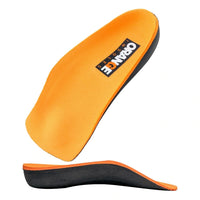
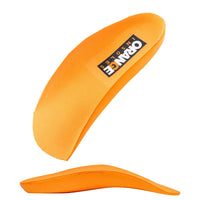
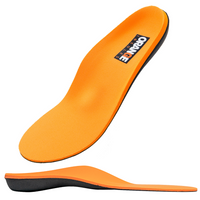
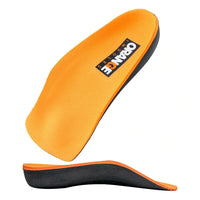
The most effective way to break the cycle is to change what happens between your feet and the ground before the weight comes off. Supportive insoles work by redistributing force across a larger surface area of your foot instead of concentrating it on your heel and overstretched plantar fascia. A well-designed insole supports your arch, absorbs impact, and helps correct pronation (when your foot rolls too far inward).
That deep heel cup design is what makes the difference under higher body weights. Unlike soft gel inserts that compress flat under sustained load, a structured insole maintains its shape and keeps doing its job step after step. The practical result is that walking becomes tolerable, standing for 30 minutes becomes manageable, and a low-impact workout becomes something you can actually finish.
Think of it as giving your feet the support they need so the rest of your body can start doing the work.
Foot-Friendly Exercises That Burn Calories
Once your feet have proper support, the goal is to start moving without re-aggravating the plantar fascia. Focus on activities that keep impact forces low:
• Swimming and water aerobics eliminate ground impact entirely while providing resistance for calorie burn. This is the best starting point for active plantar fasciitis pain.
• Cycling (stationary or outdoor) keeps your feet on the pedals with minimal stress on the plantar fascia.
• Elliptical training mimics a walking motion without the heel-strike impact that triggers pain.
• Short supported walks of 10 to 15 minutes on flat surfaces with proper arch support. Increase duration gradually as pain allows.
If you are looking for more options, there are plenty of exercises that are easy on your feet that still give you a solid calorie burn. Avoid running, jumping, and high-impact aerobics until your symptoms have improved significantly.
The progression matters. Start with zero-impact exercise, add supported walking as pain decreases, and build from there. Consistency beats intensity when your feet are healing.
The Progress Loop
Once the weight starts coming down, the biomechanics shift in your favor. Lose 10 pounds and your feet experience 30 to 60 fewer pounds of force with every step. That reduction lets inflammation calm down, gives your arch a chance to recover, and slows the wear on your heel's fat pad.
Each pound lost makes the next one easier because you can move more with less pain. Less weight means less pain, less pain means more activity, and more activity means less weight. That loop works the same way the painful cycle did, just in the right direction. As your feet feel better, walking can become a genuine part of your health routine rather than something you avoid.
Key takeaway: The first 10 pounds of weight loss can remove up to 60 pounds of force per step, creating a positive loop where each improvement builds on the last.
Start Moving With Less Pain
Foot pain does not have to be the thing that keeps you stuck. Orange Insoles are built with rigid arch support and deep heel cups designed for higher body weights, so your feet get real structural support from the first step. Find the right insole for your foot type and start moving toward relief today.