

When people think about insoles, they usually think about performance.
Runners add them to their shoes for better support during training. Athletes use them for stability on the court or field. Workers who stand all day rely on them to stay comfortable during long shifts.
But there’s another benefit that many people overlook.
Insoles can also help your body recover between activity days.
Any athlete or fitness enthusiast can tell you that what happens between activity days matters just as much as the activity itself.
Let’s take a closer look at how proper foot support can help your body recover more effectively.
Recovery Happens When Stress Is Reduced
Every active day places stress on your body.
Running, walking, standing, or training all place repeated impact on the feet and legs. Over thousands of steps, that stress travels upward through the ankles, knees, hips, and lower back.
Your body repairs and adapts during recovery periods. Muscles rebuild, inflammation settles down, and your joints return to their normal state.
But recovery becomes harder when the same mechanical stress continues the next day.
For example, if your feet collapse inward slightly while walking (a movement called overpronation), that motion can place extra strain on the arches, calves, knees, and hips. Even during light daily activities, this repeated stress can slow recovery.
That’s where supportive insoles can help.
Support Helps Reduce Repeated Strain
Many shoes come with thin liners designed primarily for comfort rather than structural support. While these liners feel soft, they often provide little arch stability or alignment control.
Supportive insoles are different.
They are designed to help guide the foot into a more stable position while walking or standing. This support can help limit excessive pronation and distribute pressure more evenly across the foot.
By improving alignment, supportive insoles can help reduce the repetitive stress that travels up the body with every step.
This doesn’t just help during workouts. It also helps on the days between workouts, when your body is trying to recover.
Learn more about how supportive insoles help reduce muscle fatigue here.
Everyday Movement Still Matters
Even on "rest days," most people are still active.
You might run errands, walk around the office, stand while cooking, or spend hours exploring a new city during travel. These activities may feel light compared to workouts, but they still involve hundreds or thousands of steps.
Without proper support, those steps can continue to stress the same tissues your body is trying to repair.
Supporting the feet during everyday activities helps reduce that ongoing strain and allows the body’s recovery processes to do their job.
Alignment Affects the Entire Kinetic Chain
Your feet are the foundation of the body’s movement system.
When the arch collapses too much or the heel shifts inward, it can change the alignment of the ankle, knee, and hip. Over time, this can lead to discomfort not just in the feet, but also in the knees, hips, or lower back.
Supporting the foot helps maintain a more stable base for the entire body. This can help reduce unnecessary stress on joints and muscles while walking or standing throughout the day.
Many people are surprised to learn that improving foot support can help reduce issues like knee discomfort or lower back fatigue.
Better Support Can Mean Less Fatigue the Next Day
One of the biggest benefits people report after adding supportive insoles is that they simply feel less tired after long days on their feet.
When the arch and heel are supported, the muscles in the feet and lower legs do not have to work as hard to stabilize the body. This can help reduce fatigue and soreness that builds up over time.
For people who train frequently, this can make a noticeable difference in how their legs feel the day after activity.
Instead of starting the next workout already fatigued, your body may feel more refreshed and ready to move.
Recovery Is Part of Performance
Athletes and active individuals often focus heavily on training routines, but recovery is just as important for long-term performance.
Sleep, hydration, nutrition, and mobility work all play major roles. But the support your body receives throughout the day also contributes to recovery.
If your feet are unsupported during daily movement, your muscles and joints may continue absorbing unnecessary stress between workouts.
Providing stable support for the arch, heel, and forefoot can help reduce that ongoing strain.
Supporting Your Feet Throughout the Week
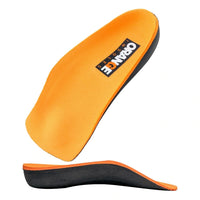
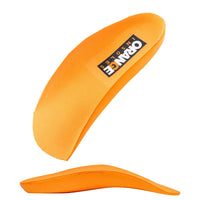
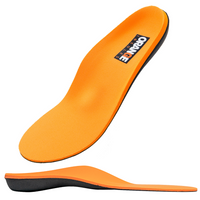
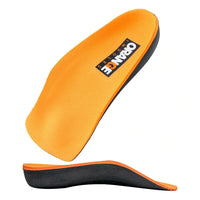
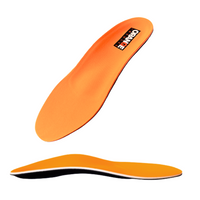
Orange Insoles are designed to provide structured arch support, a deep heel cup for stability, and metatarsal support that helps distribute pressure across the foot.
While many people start using insoles for workouts or long workdays, they often find the biggest benefit comes from wearing them consistently throughout the week.
Supporting the feet during both active days and recovery days helps reduce fatigue, improve comfort, and keep your body moving more efficiently.
All of our insoles can be used to support recovery. Because the right choice depends on your shoes, taking our insole quiz is the best place to start.
Recovery Doesn’t Only Happen at the Gym
The time between workouts is when the body repairs, adapts, and prepares for the next challenge.
Supporting your feet during everyday activities can help reduce unnecessary stress on your muscles and joints, making those recovery periods more effective.
Giving your feet the support they need can help you feel better not just during activity but the day after as well.