

Neck pain from poor posture is usually treated at the neck. Chin tucks, ergonomic monitors, foam rollers, standing desks. All of these things can help. But if they keep helping for a day and then the pain comes back, you may be treating the last link in the chain while ignoring the first.
Your body moves as a connected system. What happens at your feet influences your ankles, which influences your knees, which influences your hips and pelvis, which influences your spine, which influences your shoulders and neck. That chain is called the kinetic chain (the mechanical connection of all the joints and muscles from your feet to your head), and when something goes wrong at the bottom, the whole thing compensates.
The Kinetic Chain: How Your Body Stacks Up
Think of your skeleton as a column of stacked blocks. Each block sits on the one below it. When the base is level, the column stays straight with minimal effort. When the base is off, every block above it shifts slightly to compensate, and the blocks near the top work hardest to keep the whole thing from falling.
Your feet are the base. They are the only part of your body in constant contact with the ground, absorbing and distributing force with every step. When they align correctly, that force travels evenly up through each joint in the chain. When they don't, the compensation begins immediately and silently.
Key takeaway: Your neck doesn't work independently of your feet. Every joint in the chain influences the ones above it.
What Happens When Your Feet Fall Out of Alignment
The most common foot alignment issue is overpronation, when the arch collapses inward and the ankle rolls toward the midline of the body with each step. It's extremely common, often painless at the foot level, and easy to miss.
But watch what happens above it. When the ankle rolls inward, the shin rotates internally. Internal shin rotation causes the knee to track inward (a problem that shows up as knee pain in runners but often goes unnoticed in walkers). The inward knee rotation means the hip has to compensate, which causes a slight pelvic tilt. That pelvic tilt changes the curve of the lumbar spine (lower back). How your feet affect your back pain is a connection that shows up in clinical literature, but it doesn't stop at the back.
A shifted lumbar curve changes the thoracic curve (mid-back). The thoracic shift causes the shoulders to round forward. Rounded shoulders put the neck in a forward head position (where the head drifts in front of the center of gravity). For every inch the head moves forward, the effective weight of the head on the neck muscles roughly doubles. A normal 10- to 12-pound head becomes a 20- to 30-pound load on the muscles of the neck and upper trapezius.
That is where the chronic neck tightness comes from.
Key takeaway: Overpronation at the foot triggers a chain of compensations that end with your neck working 2 to 3 times harder than it should.
The Shoulder and Neck Connection
Rounded shoulders and forward head posture are the most visible symptoms of this chain, but they are rarely the starting point — they are the result.
The muscles most affected are the upper trapezius (runs from the base of your skull to your shoulders), the levator scapulae (connects the neck to the shoulder blade), and the suboccipital muscles (the small muscles at the base of the skull that control head position). These muscles are in a constant low-level contraction when the head is forward, trying to prevent the head from falling further out of alignment.
Physical therapy and chiropractic care help by releasing the tension in these muscles and retraining posture patterns. Hip realignment exercises address the middle of the chain. But if the foundation (foot alignment) hasn't been addressed, these interventions treat symptoms while the cause keeps producing them.
Key takeaway: Upper trap and neck tightness are the last symptom of a chain that begins much lower. Treating the neck alone without addressing foot alignment is working against the chain.
Fixing Posture From the Ground Up
PT clinics and chiropractors almost always start with the upper body because that's where the pain is. That's not wrong. The muscles need relief. But it's incomplete if the source of the problem is still feeding the chain.
Understanding the posterior chain — the connected system of muscles running from your heels to your head — shows why ground-up matters. You can straighten the top of a leaning tower, but it will lean again because the foundation is still off. The more efficient intervention is to stabilize the base and let the chain above it reset.
That's why addressing foot alignment first, or at least simultaneously, produces more durable results than top-down approaches alone.
How Insoles Help Restore the Chain
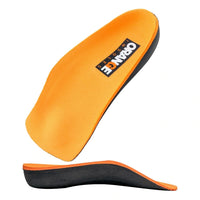
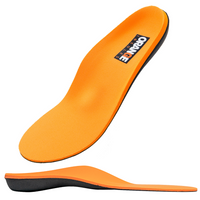
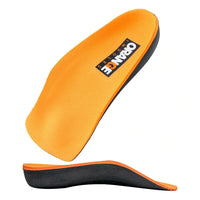
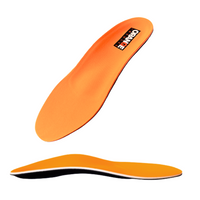
A well-designed insole does more than cushion. It positions the calcaneus (heel bone) and supports the medial arch in a way that resists overpronation. When the heel is stabilized and the arch is supported, the ankle rolls inward less. Less inward roll means less compensatory rotation at the knee, less pelvic tilt, less spinal curve change, less shoulder rounding, less forward head position.
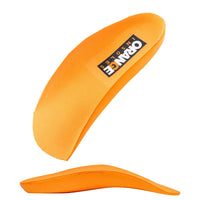
The deep heel cup design is the key feature here. A deep heel cup cradles the calcaneus and prevents it from rolling, without restricting natural foot movement. It's structural correction at the base of the chain, which is where structural correction does the most work.
This doesn't mean insoles replace physical therapy or posture retraining. It means they work with those interventions by removing a constant mechanical input that was fighting against them.
Key takeaway: Insoles don't just help your feet. By stabilizing the base of the kinetic chain, they reduce the compensation pattern that works its way up to your neck.
Three Exercises for the Full Chain
Address each level of the chain while your foot alignment is being supported.
Calf raises with arch awareness (feet). Stand with feet hip-width apart, insoles in your shoes. Rise slowly onto the balls of your feet, hold 2 seconds, lower slowly. Focus on keeping your arch lifted during the movement. 3 sets of 15 reps.
90/90 hip stretches (pelvis/hip). Sit on the floor with your front leg at a 90-degree angle in front and your back leg at 90 degrees behind. Lean gently forward over the front leg. Hold 30 to 45 seconds per side. This restores hip mobility that a tilted pelvis restricts.
Wall angels (upper back/shoulders). Stand with your back flat against a wall, arms bent at 90 degrees. Slowly slide your arms up the wall like a snow angel, keeping your lower back and elbows in contact with the wall. Bring them down slowly. 3 sets of 10 reps. This retrains thoracic extension and resets the shoulder position that forward head posture disrupts.
Feel Better From the Ground Up
If your neck has been tight for months despite stretching, adjustments, or ergonomic changes, the chain below it may be the missing piece. Supporting your foot alignment doesn't fix everything, but it removes a persistent mechanical input that may be working against every other effort you're making.
Orange Insoles are built to stabilize the heel and arch on every step, giving the chain above a better foundation to work with. See which insole fits your feet and your life and take the first step toward feeling better from the ground up.
Frequently Asked Questions
Can insoles help with neck pain? Indirectly, yes. Insoles that correct overpronation and stabilize foot alignment reduce compensatory movement through the kinetic chain (the connected system from your feet to your head). By reducing the mechanical input at the base, you reduce the strain that works its way up to the neck.
How does foot alignment affect posture? When the arch collapses or the foot overpronates, the ankle rolls inward, the knee tracks inward, the pelvis tilts, and the spine compensates. Each compensation shifts the joints above it, eventually pulling the shoulders forward and the head in front of the center of gravity.
Do I need custom orthotics or will insoles work? Custom orthotics are prescribed for specific diagnosed conditions. For most people with general overpronation and posture-related discomfort, a quality over-the-counter insole with a deep heel cup and firm arch support provides meaningful correction without the cost of custom devices.