

You spent an hour on your feet at a work event, a conference, or a long day at the office. Your dress shoes looked great. Your feet did not feel great.
You've probably tried buying insoles for them. Maybe they were too thick and your heel slipped out. Maybe they made the toe box feel like a vice. Maybe they folded, squeaked, or just moved around every time you took a step.
The problem usually isn't the insole itself. It's the fit. Dress shoes have far less internal volume than sneakers or work boots, and most insole advice is written for athletic footwear. What works in a running shoe can turn a loafer into a punishment device.
This guide approaches it differently. Instead of ranking products, it explains which type of insole fits which type of dress shoe, and what to watch for in each.
Why Most Insoles Fail in Dress Shoes
Dress shoes are built to a tighter last (the form the shoe is shaped around) than most casual or athletic footwear. They have shallower heel cups, narrower toe boxes, and less vertical clearance between the footbed and the upper.
A standard full-length insole adds 4 to 8mm of height. In a sneaker, that's usually fine. In a fitted oxford or a pointed-toe loafer, that same thickness pushes your foot up and forward, cramming your toes against the front and making the heel gap wider than intended. The shoe no longer fits correctly, and no amount of cushioning compensates for that.
The solution is matching your insole choice to the specific geometry of your shoe.
Key takeaway: Dress shoe failures aren't about insole quality — they're about volume. The wrong thickness in the wrong shoe creates new problems instead of solving old ones.
Know Your Dress Shoe Type
Different dress shoe styles have different internal volume, and that determines which insole approach works.
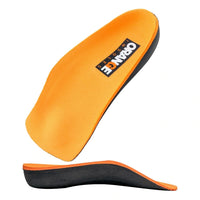
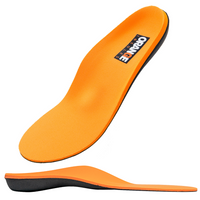
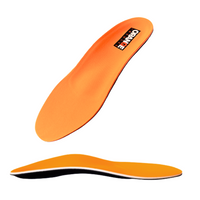
Oxfords and derby shoes have a structured heel counter, a relatively standard toe box, and moderate internal volume. They are the most insole-friendly of the dress shoe category. Full-length slim-profile insoles typically work here such as the Orange Sport Insoles, provided the factory insole is removed first.
Loafers vary widely. Penny loafers and horsebit styles often have more volume through the midfoot, making them a reasonable candidate for 3/4-length insoles (which end just before the ball of the foot, leaving the toe box untouched). Slip-on loafers with pointed toes generally work best with a heel cup insert or a very thin 3/4-length option.
Chelsea boots and ankle boots have good volume through the shaft and usually accept a slim full-length insole comfortably. The higher ankle support means your foot is more secured, and there's typically room to work with in the footbed.
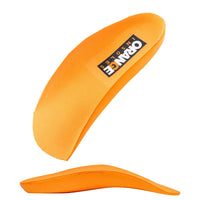
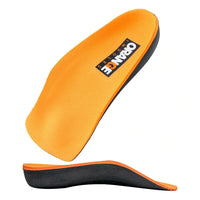
Dress slip-ons with pointed or tapered toes are the hardest case. The narrow front leaves almost no room for any insole material past the midfoot. This is where the Orange Light comes into play as it's a 3/4 length insole that features a single layer of compressed foam. Given the slim nature, it doesn't compress the toe box.
Key takeaway: Remove the factory insole before adding a replacement. Most dress shoes have a thin removable sockliner. Take it out first and you instantly create more space.
Full-Length vs. 3/4-Length vs. Heel Inserts
Understanding the three formats helps you match the right insole to the right shoe.
Full-length insoles run the entire length of the shoe from heel to toe. They provide the most complete support, including arch and ball-of-foot coverage. They work best in oxfords, derby shoes, and chelsea boots where there's enough volume. Always remove the factory insole first. If the shoe fits tight after adding one, size up half a size.
3/4-length insoles stop just before the ball of the foot, leaving the toe box completely free. This makes them the best option for loafers, pointed-toe styles, and any shoe where the front is fitted. You get heel and arch support without adding any bulk to the narrowest part of the shoe. These work particularly well if you're on your feet during long active days because the arch support reaches the area that takes the most sustained load.
Key takeaway: 3/4-length insoles are the most versatile option for dress shoes. They protect the arch and heel without crowding the toe box.
What to Look for in a Dress Shoe Insole
Beyond format, four properties matter most for dress shoe use.
Thin profile. Look for insoles that have a minimal arch profile, tapering thinner at the heel and toe. Anything thicker is designed for athletic shoes and will fight the fit of a dress shoe.
Firm arch support. Soft foam might feel comfortable for the first few hours, then collapse under sustained weight. A firmer arch that holds its shape keeps you comfortable and supported through a full workday, not just the first hour.
Moisture management. Your feet sweat regardless of shoe style. A top layer with some moisture-wicking properties keeps the footbed from becoming slippery, which is especially important in leather dress shoes where slipping is a real issue.
No squeaking. Insoles that aren't positioned correctly can squeak against the shoe lining, which is acceptable in a gym and mortifying in a quiet office or conference room. A proper fit (removing the factory insole first) eliminates most squeaking issues.
Getting the Fit Right
A few practical steps make the difference between an insole that works and one that ends up in a drawer.
Remove the factory insole first. Most dress shoes have a removable sockliner. Peel it out and you may be surprised how much room you gain. The new insole replaces it, not layers on top of it.
Check the fit standing up, not sitting down. Your foot expands when you bear weight. An insole that feels fine sitting becomes too tight when you stand. Always test with the shoe laced or closed and your full weight on it.
If it's borderline, size up. If you're adding a full-length insole to a fitted shoe and it's close, going up half a size in the shoe gives the insole room to sit correctly.
Give it a break-in day. Wear the insoles for a few hours the first day rather than committing to a full-day event. Let the materials settle to your foot shape before the stakes are high.
Key takeaway: Fit testing takes five minutes and saves you from discovering a problem at the worst possible time.
Step Into Something Better
Dress shoes don't have to be the shoes you dread wearing. The right insole, matched to your shoe type, makes a 10-hour conference day feel manageable, not something you're counting down from.
Orange Insoles offers both full-length and slim-profile options designed for real-world use, including dress shoes. Find the right fit for your footwear here and feel the difference every step of the way.
Frequently Asked Questions
Do insoles work in dress shoes? Yes, but fit matters. Dress shoes have less volume than athletic shoes, so you need a thinner or shorter insole, and you should always remove the factory insole first to create space.
Full-length or 3/4-length insoles for dress shoes? 3/4-length insoles are usually the better choice. They support your arch and heel without adding bulk to the toe box, which is the tightest part of most dress shoes.
What if the insole makes my dress shoes too tight? Remove the factory insole first. Most people skip this step. If it's still tight, try a 3/4-length insole instead of full-length, or size up half a size in your dress shoes.