

Your podiatrist says you need arch support. The internet says arch support makes your feet weak. Somebody is wrong, and your feet are caught in the middle.
The barefoot shoe movement has exploded. Brands like Vivobarefoot and Xero Shoes have built passionate followings around one idea: your feet were designed to work without cushioning, and modern shoes have made them lazy. It's a compelling argument. It also leaves out some important details.
This is not a debate with a clear winner. The right answer depends on your feet, your activity level, and whether you have any existing conditions. Here is what the evidence actually supports.
What Barefoot Shoes Get Right
Minimalist shoes (sometimes called zero-drop shoes because there is no height difference between the heel and toe) are built on a real principle. Your feet have over 100 muscles, tendons, and ligaments. When thick cushioning and rigid arch support do all the work, those structures get less of a workout.
Research supports part of this. A 2019 study in Scientific Reports found that people who regularly wore minimalist shoes had stronger intrinsic foot muscles (the small muscles inside the foot that stabilize your arch) compared to those in conventional shoes. Proprioception (your body's sense of where your feet are in space) also improved.
For healthy feet with no structural issues, spending less time in shoes can build strength over time. That part of the barefoot argument holds up.
Key takeaway: Minimalist shoes can strengthen healthy feet by making foot muscles work harder. The science is real, but it comes with conditions.
Where the Barefoot Argument Falls Apart
The problem is that most people do not have perfectly healthy, structurally neutral feet.
About 25% of adults have flat feet. Millions deal with plantar fasciitis (inflammation of the tissue that runs along the bottom of your foot). Others have high arches, bunions, or heel spurs. And everyone's feet change with age, weight fluctuations, and accumulated wear.
For these people, stripping away all support is not strengthening. It is stress on structures that are already struggling. Going barefoot with flat feet is like removing the brace from a healing ankle and telling it to toughen up.
The RunRepeat meta-analysis of 150 studies found something telling: orthotics and arch support made little difference for healthy populations, but they were genuinely beneficial for people with specific conditions. In other words, support is not a crutch for everyone, but it is essential for some.
If you have been dealing with foot fatigue or recurring pain, jumping into zero-drop shoes without a plan is a risk, not a shortcut.
Key takeaway: If you have flat feet, plantar fasciitis, or other structural issues, removing support can make things worse. The "feet need to be free" philosophy has limits.
The Question Nobody Asks: Support That Still Lets Your Feet Work
Most articles frame this as an either/or choice. Barefoot or supportive. Freedom or structure. But for many people, the best long term approach sits somewhere in the middle.
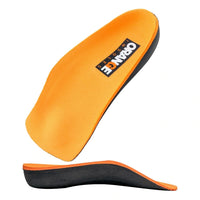
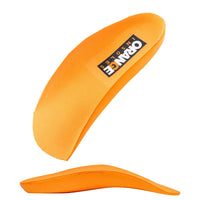
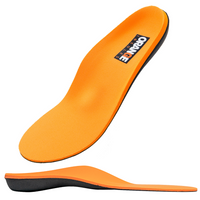
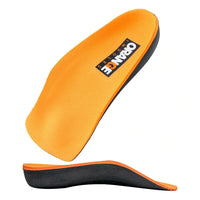
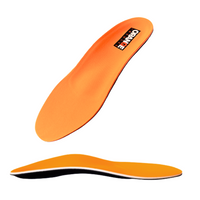
A well designed insole should support the foot without taking over its job. A deep heel cup can help stabilize the heel and support the arch while still allowing the foot to move naturally. Your intrinsic foot muscles still engage. Your foot still works. The goal is not to eliminate movement, but to help guide and support it.
Think of it less like a cast and more like a spotter at the gym. You are still doing the lift. The support is simply there to help keep things aligned when fatigue, overpronation, or repetitive stress start to take over.
This is also why the materials and construction of an insole matter. Some rigid orthotics can limit natural movement. But a supportive insole designed with the right combination of contour and cushioning can allow the foot to flex and function more naturally while still providing structure where it is needed most.
Key takeaway: Support and natural movement are not opposites. The right insole provides structure without locking your foot down.
How to Decide What Is Right for Your Feet
The honest answer depends on a few things:
You may do well with minimalist shoes if: - You have no current foot pain or diagnosed conditions - You have neutral or high arches with good stability - You are willing to transition gradually over 8 to 12 weeks - You are primarily walking or doing light activity, not standing for 8-hour shifts
You likely need support if: - You have flat feet or overpronation (when your foot rolls inward with each step) - You deal with plantar fasciitis, heel spurs, or metatarsalgia (ball-of-foot pain) - You stand or walk on hard surfaces for long stretches - You have had foot or ankle injuries that changed how you move - You are over 50, when the fat pad on the bottom of the foot naturally thins
For many people, the best approach is not choosing one camp. It is using supportive footwear during high-demand activities (work, running, long walks) and spending some barefoot time at home to keep foot muscles active. If you are not sure where you fall, this guide can help you find the right insole for your situation.
Key takeaway: Match your footwear to your feet and your activity. There is no single right answer, but there is a right answer for you.
If You Want to Try Minimalist Shoes, Transition Slowly
Switching from conventional shoes to zero-drop overnight is the number one reason people get hurt. Your Achilles tendon, calf muscles, and plantar fascia need time to adapt to a lower heel position.
A safe transition looks like this: - Weeks 1 to 2: Wear minimalist shoes for 30 minutes a day on soft surfaces - Weeks 3 to 4: Increase to 1 hour, add walking on harder surfaces - Weeks 5 to 8: Gradually extend wear time, paying attention to any new pain - Weeks 9 to 12: Full transition if everything feels good
Stop and reassess if you develop heel pain, arch soreness, or Achilles tightness. Plantar fasciitis stretches can help during the transition, but persistent pain means your feet may need more structure than minimalist shoes provide.
And if your shoes are wearing down unevenly, that is a clue about your biomechanics. Shoes that have lost their support make every step less stable, whether they are minimalist or traditional.
Key takeaway: Give your feet 8 to 12 weeks to adjust to minimalist shoes. Rushing the switch is how most people end up hurt.
Your Feet Deserve a Thoughtful Answer
The barefoot shoe trend started with a good question: are we over-supporting our feet? For some people, the answer is yes. For others, support is exactly what keeps them moving without pain.
The best footwear choice is the one that matches your feet, your life, and your goals. If you are active, on your feet often, or dealing with any foot condition, a quality insole gives you structured support that still lets your feet do their job.