


People often blame their mattress or sleeping position for morning stiffness, but discomfort at night is not always caused by sleep itself.
Daily posture, time on your feet, long hours sitting, and repetitive strain all affect how your body feels once you finally get into bed. In many cases, the tension started building long before you fell asleep.
How Daytime Alignment Follows You to Bed
Your body is a stacked system. Feet support ankles, ankles support knees, knees support hips, and hips support your spine. When one level shifts out of position, the levels above it compensate. Physiologists call this the kinetic chain.
When your feet roll inward (a pattern called pronation), your knees rotate slightly, your hips tilt to compensate, and your lower back absorbs the difference. This happens with every step. Over thousands of steps a day, small compensations create real muscle fatigue.
By evening, your calves, hips, and lower back have been working overtime to keep you upright. That accumulated tension doesn't vanish because you're horizontal. It follows you into bed as tightness, aching, and the restless shifting that fragments your sleep.
Think about how your body feels after a long day on your feet versus a day spent mostly sitting. Different activities load different parts of the chain, but the result is the same: muscles that spent hours compensating don't simply relax on command. They hold that guarding pattern into the night.

Key takeaway: Sleep quality is shaped by the 16 hours you spend upright, not just the 8 hours you spend lying down.
The Tension That Builds While You Stand
Muscle tension from poor daytime alignment usually builds in the lower back, hips, and calves — the same areas that often ache at night or wake people during sleep.
A 2021 study published in Musculoskeletal Science and Practice found that sleep positions linked to spinal symptoms increased nighttime wakefulness. But sleep posture is only part of the equation. Daily strain matters too.
Long hours sitting, standing, or walking in unsupportive footwear place repeated stress on the same muscle groups throughout the day. By bedtime, that accumulated tension can make it harder for the body to fully relax.
The pattern is especially common among people who spend long shifts on their feet, including nurses, retail workers, teachers, and warehouse staff.
If you spend hours at a desk, the way your hips and pelvis align during sitting plays a direct role in how your lower back feels when you finally try to rest.

Key takeaway: Chronic tightness from daytime misalignment is a common, overlooked cause of disrupted sleep.
Where Your Feet Fit Into the Picture
This is the part of the chain most people skip. Mattress ads talk about spinal support. Pillow companies talk about neck alignment. But the foundation of your alignment is the ground up, and that starts with your feet.
When your heel sits in a neutral, stable position, your ankle stacks correctly over it, your knee tracks straight, and your hip stays level. The posterior chain (the connected line of muscles running from your calves through your glutes to your lower back) works in balance rather than fighting to compensate.
When your heel is unstable, whether from flat shoes, worn-out soles, or natural foot structure, that whole chain shifts. Your muscles work harder all day to maintain balance and forward motion. By bedtime, you're carrying tension that started at the ground and traveled upward through every joint along the way.
Poor foot alignment can contribute to lower back pain by changing how force moves through the body during standing and walking. Back pain, in turn, is one of the most common reasons adults report disrupted sleep.

Key takeaway: Foot alignment is the first link in the chain that determines how much tension your body carries into bed.
Fixing the Problem Before You Lie Down
Improving your sleep doesn't have to start with a new mattress. It can start with what you put in your shoes.
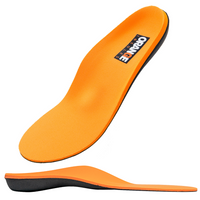
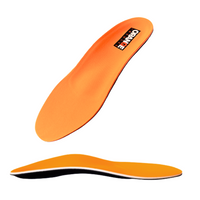
A structured insole with a deep heel cup holds the calcaneus (your heel bone) in a neutral position. That stabilizes pronation, reduces the compensatory chain through your knees and hips, and lowers the muscular effort your body puts in just to keep you standing straight. Less effort during the day means less residual tension at night.
Pairing better foot support with a few minutes of evening stretching, particularly for the hip flexors and calves, can make a noticeable difference. Treating foot fatigue at the end of the day, instead of ignoring it, gives your body a chance to release the tension it's been holding.
A 2024 study in Life (MDPI, 14(10), 1244) found a direct correlation between overall posture quality and sleep quality in adults. The researchers measured posture during the day and sleep metrics at night. Better daytime posture predicted better sleep. The study didn't test insoles specifically, but the implication lines up: fix alignment during waking hours, and sleep improves as a secondary benefit.

Key takeaway: Supporting your feet during the day reduces the tension load your body carries to bed at night.
Start Your Sleep Fix During the Day
If you've been chasing better sleep with mattress upgrades and melatonin, consider looking further upstream. The alignment that matters most happens while you're on your feet.
Orange Insoles are built around a deep heel cup that stabilizes the foundation of your kinetic chain. Better alignment during the day, less tension at night, and sleep that actually feels like rest. See how the deep heel cup works and find the right fit for your shoes.