

Eighty percent of adults will deal with lower back pain at some point. For most, the search for relief leads to stretching routines, new mattresses, or chiropractor visits. Fewer people look down at their feet.
But research suggests that for a specific type of lower back pain, foot alignment plays a bigger role than most people realize. Insoles can help — though not for every kind of back pain, and understanding the difference matters before you spend money on the wrong solution.
How Your Feet Connect to Your Lower Back
Your body works as a connected chain. Biomechanics researchers call it the kinetic chain: your feet, ankles, knees, hips, and spine all influence each other's alignment. When your foot rolls inward too far (a movement called overpronation), it triggers a chain reaction. Your tibia rotates internally, your knee shifts inward, your hip tilts forward, and your lumbar spine compensates by increasing its curve.
That compensation creates strain on muscles and joints that weren't designed to carry load that way. Over weeks and months of walking, standing, and moving with that misalignment, the lower back absorbs the consequences.
The Framingham Foot Study tracked 1,930 participants and found that people with overpronated feet had 1.5 times the risk of developing lower back pain compared to those with neutral foot alignment. The connection is real, measurable, and well-documented.

Key takeaway: Overpronation creates a chain reaction from your feet to your lumbar spine, and research shows it significantly increases lower back pain risk.
What the Research Says About Insoles and Back Pain
The evidence on insoles for lower back pain is honest but nuanced. A 2014 systematic review by Chuter and colleagues analyzed 11 randomized controlled trials with 2,672 total participants and concluded there was "insufficient evidence" to broadly recommend insoles for treating or preventing lower back pain.
That sounds discouraging until you look closer. The review pooled studies that included people with all types of back pain, including disc herniations, degenerative conditions, and nerve compression. For those causes, insoles were never going to be the answer.
The more targeted research tells a different story. A 2013 randomized controlled trial by Castro-Mendez studied 60 patients with chronic lower back pain who also had overpronated feet. Participants who received custom orthotics showed meaningful pain reduction over four weeks compared to those given flat insole placebos. The key variable: the patients were screened specifically for foot pronation using the Foot Posture Index before being enrolled.
The pattern across the research is consistent. When back pain has a biomechanical root — meaning it stems from how your body aligns and moves rather than from a structural injury — correcting foot alignment with supportive insoles can reduce the strain on your lower back.

Key takeaway: Insoles help lower back pain that originates from foot misalignment, not from disc injuries or nerve compression.
When Insoles Can Help Your Back Pain
Insoles are most likely to provide relief when your lower back pain is connected to how your body moves and stands. Specific situations where the biomechanical connection is strongest:
Flat feet or fallen arches. Without adequate arch support, your foot collapses inward with every step, pulling your knee and hip out of alignment. Insoles with structured arch support correct the foundation, which reduces compensatory strain higher up.
Leg length discrepancy. Even a small difference in leg length can cause your pelvis to tilt unevenly, putting asymmetric load on your lumbar spine. A heel lift or contoured insole can balance the difference.
Jobs that require standing or walking for hours. Standing on hard surfaces without proper foot support forces your lower back muscles to work overtime to stabilize your spine. If your back pain worsens during long shifts or extended walking but eases when you sit, your feet are likely part of the equation.
Pain that started gradually, not from an injury. Biomechanical back pain typically builds over time. It gets worse with activity and better with rest. If your back pain arrived suddenly after lifting something heavy or after a fall, the cause is more likely structural, and insoles alone won't address it.

Key takeaway: If your back pain builds gradually, worsens with standing or walking, and you have flat feet or overpronation, insoles are worth trying.
When Insoles Won't Fix the Problem
Being honest about limitations builds trust and saves you time. Insoles are unlikely to help if your lower back pain comes from:
-
Herniated or bulging discs pressing on nerves
-
Spinal stenosis (narrowing of the spinal canal)
-
Sciatica caused by nerve root compression
-
Degenerative disc disease or arthritis in the spine
-
Acute injury from a fall, car accident, or heavy lifting
These conditions need medical evaluation and treatment. Insoles can still be part of a broader care plan by improving your overall alignment, but they won't resolve the root cause. If your pain radiates down your leg, comes with numbness or tingling, or doesn't improve with rest, see a healthcare provider before trying insoles as a solution.

Key takeaway: Disc injuries, nerve compression, and degenerative conditions need medical treatment. Insoles support alignment but can't fix structural damage.
A Quick Self-Check: Is Your Back Pain Foot-Related?
Before investing in insoles for your back, run through these indicators:
Check your shoe wear. Look at the soles of your most-worn shoes. If the inner edge is worn down significantly more than the outer edge, you're likely overpronating, and your feet could be contributing to your back pain.
Notice your pain timing. Does your lower back hurt more after a long day on your feet? Does it feel better after sitting for a while? Activity-dependent pain that tracks with standing and walking suggests a biomechanical cause.
Look at your arches. Stand barefoot on a wet surface and step onto a dry piece of paper. If the print shows your entire foot with no arch curve, you have flat feet, and your lower back may be compensating for lack of support below.
Consider your footwear. If you spend most of your day in worn-out shoes, unsupportive flats, or shoes without proper arch structure, your feet aren't getting what they need to keep your spine aligned.
If two or more of these apply, insoles designed for alignment and posture correction are a practical next step.

Key takeaway: Uneven shoe wear, pain that worsens with standing, flat arches, and worn-out shoes are signs your back pain may be foot-related.
What to Look for in an Insole for Back Pain
Not all insoles address back pain equally. Cushioning alone doesn't correct alignment. What matters is structural support that repositions your foot and reduces the compensatory strain on your lower back.
Arch support that matches your foot shape. A contoured arch prevents your foot from collapsing inward, which keeps your knee, hip, and spine in better alignment. Generic flat inserts don't provide this.
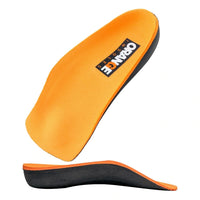
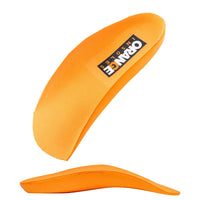
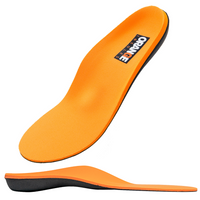
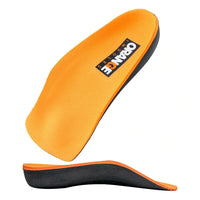
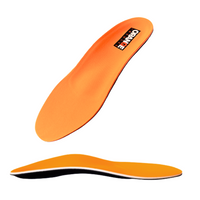
A deep heel cup. A heel cup that cradles and stabilizes your heel keeps your ankle from rolling inward at the point where the kinetic chain starts. This is one of the most effective features for addressing pronation-related back pain. Orange Insoles are built around a signature deep heel cup specifically for this purpose.
Firm support, not just softness. Memory foam and gel insoles feel comfortable initially but compress quickly and don't correct alignment. Structured insoles maintain their shape under your body weight, which is what your back needs.

Key takeaway: Arch support and a deep heel cup correct the alignment issues that cause biomechanical back pain. Cushioning alone is not enough.
Complementary Steps That Help
Insoles work best as part of a broader approach to whole-body alignment. A few habits that support your lower back alongside better foot support:
-
Strengthen your core and glutes. Weak glute muscles and an unstable core force your lower back to pick up the slack. Basic glute bridges and planks make a real difference.
-
Stretch your hip flexors. Tight hip flexors pull your pelvis forward and increase the curve in your lower back. If you sit for most of the day, regular hip flexor stretches can reduce that pull.
-
Move throughout the day. Prolonged stillness in any position stresses your spine. Set a reminder to stand, walk, or stretch every 30 to 45 minutes.
Find Relief from the Ground Up
Lower back pain driven by foot misalignment is one of the most fixable types of back pain, and most people never think to address it. If the self-check above points to your feet, the right insoles can change how your entire body carries itself.
Orange Insoles are designed with the arch support and deep heel cup that correct the alignment chain from your feet through your hips to your lower back. Find the right fit for your feet and feel the difference where it matters most.