

Most people own multiple pairs of shoes but wear the same ones almost every day. The work boots come on at 6 AM and come off at 6 PM. The sneakers go on every morning walk. The same flats handle every errand.
It feels efficient. But your shoes need recovery time just like your body does, and skipping that recovery affects both the shoes and the feet inside them.
Your Shoes Need Rest Days Too
Every step compresses the midsole foam in your shoes. EVA foam (the spongy material that makes up most midsoles) flattens under repeated load and needs 24 to 48 hours to decompress and return to its original shape. When you wear the same pair every day, the foam never fully recovers. It stays partially compressed, and each day starts with slightly less cushioning than the day before.
A person who stands or walks for work puts 8,000 to 10,000 steps through their shoes per shift. At 1.5 to 3 times their body weight per step, that is a significant amount of cumulative force. Giving shoes a day off between wears lets the materials bounce back and maintain their support longer.
Key takeaway: EVA foam needs 24 to 48 hours to decompress. Daily wear means your shoes never fully recover their cushioning.
What Happens When You Wear the Same Shoes Every Day
Beyond foam compression, daily wear creates three other problems that build quietly over time.
Moisture buildup. Your feet produce about half a pint of sweat per day. Shoes that don't get a chance to dry out between wears become breeding grounds for bacteria and fungus, which leads to odor and increases the risk of infections like athlete's foot.
Accelerated breakdown. Shoes worn every day deteriorate roughly twice as fast as shoes in a two-pair rotation. The outsole wears unevenly, the heel counter softens, and the upper material stretches beyond its designed shape. What should last eight months lasts four.
Repetitive pressure patterns. The same shoe creates the same pressure points on the same spots of your foot every single day. Over time, this can contribute to calluses, blisters, and overuse conditions like plantar fasciitis. Rotating shoes changes where pressure lands and gives stressed areas a break.
Key takeaway: Same shoes every day means trapped moisture, faster wear-out, and repetitive stress on the same spots of your feet.
What the Research Shows About Shoe Rotation
A 2015 study published in the Scandinavian Journal of Medicine & Science in Sports (Malisoux et al.) tracked 264 recreational runners over 22 weeks. Runners who rotated between multiple pairs of shoes had 39% fewer running-related injuries than those who used a single pair.
The researchers attributed this to biomechanical variation. Different shoes have different heel drops, cushioning profiles, and support structures. Alternating between them distributes mechanical stress across different muscles, tendons, and joints instead of loading the same structures identically every session.
While that study focused on runners, the principle applies to anyone on their feet regularly. Nurses, warehouse workers, retail staff, teachers, and parents chasing toddlers all accumulate enough daily steps to benefit from the same kind of variation. Choosing shoes that match your activity level and rotating between them reduces the repetitive strain that leads to overuse injuries.
Key takeaway: Research shows 39% fewer injuries with shoe rotation, thanks to biomechanical variation that spreads stress across different structures.
How to Build a Simple Shoe Rotation
You do not need a large collection of shoes to benefit from rotation. For most people, two to three pairs organized by activity is enough to improve comfort, support, and shoe longevity.
Work pairs. If you spend long hours standing or walking, having two dependable work pairs is ideal. This might mean two pairs of work boots, supportive sneakers, nursing shoes, or other everyday footwear. Rotating between them allows each pair time to fully dry out, decompress, and recover between wears.
Activity pair. Walking shoes, running shoes, gym shoes, or hiking shoes should be reserved for exercise and higher impact activities. Ideally, this pair has a different feel or construction than your work footwear so your body is not repeating the exact same movement pattern every day.
Casual pair. Shoes for errands, social events, or lighter days help reduce wear on your primary footwear and give your work or activity shoes additional recovery time.
The goal is simple: avoid wearing the same pair every day whenever possible. Alternating between two work pairs alone can make a noticeable difference in how long your shoes stay supportive and comfortable. Athletic shoes especially benefit from recovery time between uses, since the cushioning materials need time to rebound after repeated impact.
Key takeaway: A simple rotation of two to three pairs helps your shoes last longer, maintain support better, and stay more comfortable over time."
Why Each Pair Needs Its Own Insoles
If you use insoles, it can be tempting to move one pair from shoe to shoe. While that may seem convenient, it often leads to inconsistent support and extra wear on the insoles themselves.
Different shoes fit and function differently. Heel shape, arch placement, depth, cushioning, and overall volume can vary quite a bit from one pair to another. An insole that feels secure and supportive in one shoe may not sit as well in another, which can affect comfort and stability throughout the day.
For the best experience, it helps to keep a dedicated pair of insoles in each shoe you wear regularly. That way, every pair is set up properly and ready to provide consistent support whenever you rotate footwear.
Using multiple pairs of insoles can also help extend their lifespan. Instead of one set absorbing every step and every hour on your feet, the impact is shared across several pairs, giving both your shoes and insoles time to recover between wears.
Key takeaway: Insoles mold to their shoe. Swapping one set between pairs defeats the purpose of rotation.
Give Your Feet the Rotation They Deserve
Shoe rotation is one of the simplest things you can do for your feet, your comfort, and your wallet. Fewer injuries, longer-lasting shoes, and better support every time you lace up.
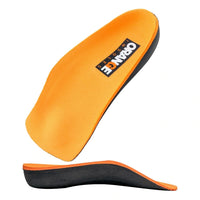
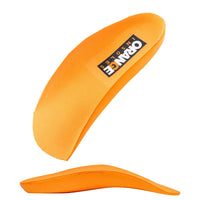
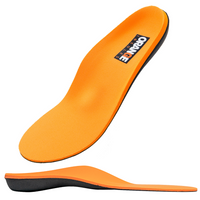
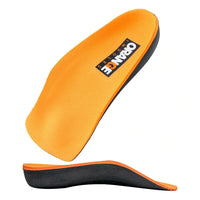
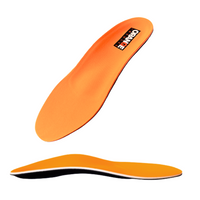
Orange Insoles make it easy to outfit every pair in your rotation with the support your feet actually need. With a deep heel cup and firm arch support, they keep each pair working the way it should. Find the right insole for each pair and feel the difference from your very first step.