

You slid a new pair of insoles into your steel-toe boots, laced up, and now your toes are jammed against the cap with every step. Sound familiar?
That's the most common insole mistake in work footwear, and it comes down to one thing: a steel-toe boot is not built like a regular boot. The rigid safety cap takes up space inside the toe box that a standard boot gives freely to your foot. Add a thick insole and you're pushing your toes into a ceiling that will never give.
Meanwhile, the stock insole that shipped with your boots is probably a flat slab of foam with minimal arch support. It starts compressing within weeks. So the need for a better insole is real, but the room for error is smaller than in any other shoe you own.
What Steel-Toe Insoles Need to Get Right
Four things separate an insole that works in a steel-toe boot from one that makes things worse.
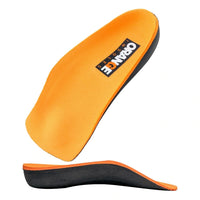
A thin forefoot. Every millimeter of thickness under the ball of your foot pushes your toes closer to the cap. Some use dual-density foam (firmer on the bottom for structure, softer on top for comfort) to deliver cushioning without bulk.
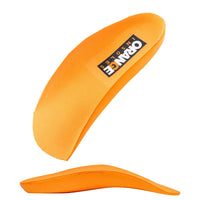
An arch that cradles, not lifts. Aggressive arch profiles raise your entire foot platform inside the boot, and that height cascades forward into the toe zone. A contoured, semi-rigid arch shell supports your natural arch shape without stacking height. If you're unsure which profile fits your foot, our guide to choosing the right insole walks through arch types and foot shapes.
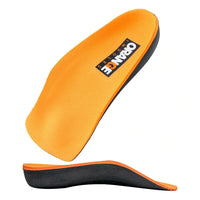
A deep heel cup. Steel-toe wearers typically spend 8 to 12 hours on concrete, steel decking, or asphalt. A deep heel cup absorbs impact and keeps your foot anchored in place, preventing the forward slide that causes blisters. There's a reason Orange Insoles' deep heel cup design is a standout feature for work boot wearers.
Moisture control. Steel-toe boots run hotter than regular boots because the cap doesn't breathe. A moisture-wicking top cover and antimicrobial treatment aren't luxury add-ons here; they directly affect how your feet feel by hour ten.
Key takeaway: Thin forefoot, supportive arch, deep heel cup, moisture management. That's the checklist for insoles for steel toe boots.
Full-Length or 3/4-Length?
This decision depends on how much room your toes already have.
Go with 3/4-length if your boots are snug in the toe box. A 3/4-length insole stops before the forefoot, giving you arch support and heel cushioning without adding any material under the toe cap. If you wear thick work socks, this is usually the safer choice.
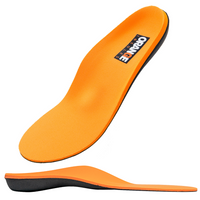
Choose full-length if your boots have clearance to spare. Some boots are designed to accommodate aftermarket insoles. If the stock insole peels out easily and your toes still have breathing room, a full-length option with a tapered forefoot gives you continuous support from heel to toe.
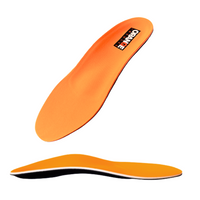
One thing to watch: trimming a full-length insole to fit can leave a cut edge right where the toe cap curves, creating a pressure ridge under the ball of your foot. This is why Orange Insoles don’t require any trimming — our full-length insoles are measured to fit your shoes as-is.
How to Fit-Test Your Insoles
Getting this right takes about ten minutes and saves you from a miserable shift.
1. Remove the stock insole and compare thicknesses. If the new insole is thicker in the forefoot, expect to lose toe clearance.
2. Insert the new insole and lace up wearing the socks you actually wear on shift.
3. Stand and push your foot forward. You should be able to wiggle your toes freely without feeling the front of the boot or the toe cap. If your toes touch, the insole is too thick.
4. Walk for five minutes. Check for heel slippage, arch pressure, or forefoot compression.
5. Wear them for a full day before deciding. Feet swell during long shifts, and a fit that works at 7 AM may not hold up by 3 PM.
If you're noticing foot fatigue building during your shift, the right insole can make a meaningful difference. And if you're not sure whether what you're feeling is normal tiredness or something deeper, it helps to understand the line between fatigue and pain.
Keep Them Working
Work boot insoles take a beating. Concrete dust, sweat, and repetitive compression wear materials down faster than in casual shoes.
Pull your insoles out at the end of each shift and let them air dry overnight. Wipe them down with a damp cloth and mild soap once a week. And plan to replace them every 6 to 12 months - once the insole has lost its rigidity and your body starts to feel more fatigue than it normally would.
Your boots pair well with the right footwear choices, too. If you're standing all day, the combination of a supportive boot and a well-fitted insole makes more difference than either one alone.
Key takeaway: Air-dry daily, replace every 6 to 12 months, and don't keep wearing insoles that have gone flat.
Get Comfortable in Your Steel-Toe Boots
Your boots keep you safe. The right insoles make them comfortable enough to wear all day. Orange Insoles are built for work footwear, with the low-profile forefoot and deep heel cup that steel-toe boots demand. Find the right match for your boots.