

You are standing in the shoe aisle with a new pair of winter boots, wondering exactly how they should fit. Standard advice tells you to buy a half size larger for thick winter socks. That solves one problem but creates another. When you size up for heavy wool socks, you now own a boot with more volume than your foot requires on days you wear thin cotton socks. This leaves you with a loose boot that slips at the heel and lets your foot slide forward downhill. Knowing how your boots should fit means understanding how to manage that extra volume so you can keep moving comfortably.
How much room should be in the toe of a boot? Aim for about half an inch (or the width of your thumb) past your longest toe when wearing thick winter socks. If you wear thin socks, a quarter inch is an acceptable amount of space.
Heel Hold and Calf Fit
While toe room is important, heel hold is the actual failure point for most winter footwear. If your heel lifts significantly every step, you will get blisters, and your feet will feel fatigued. A tiny bit of movement is normal when a heavy boot is brand new, and the sole is stiff. As the sole breaks in and bends with your foot, that minor lift usually stops. If your heel easily slides up and down out of the boot, it is simply too big. Test this before you buy by walking indoors and feeling where your foot shifts. People also wonder how boots should fit around the calf area. Tall boots should wrap comfortably around your leg without restricting circulation. You should be able to slide one or two fingers between the boot and your leg.
The Insole Solution for Extra Volume
This brings us back to the half-size trade-off. Sizing up gives you the toe room you need for thick socks in cold weather. On mild days when you wear thinner socks, your boot feels sloppy. Instead of dealing with a poor fit or cramming two pairs of socks onto your feet, you can use a supportive insole as your primary fit instrument. An insole takes up extra volume inside the boot, so your foot stays locked perfectly in place, providing the support you need to do more. Understanding internal shoe structure is key to finding the right fit, which you can explore in our guide on Performance, Balance, Comfort: A Guide To The Anatomy Of A Shoe.
Thick Removable Liners Point to Orange Full or Orange Sport
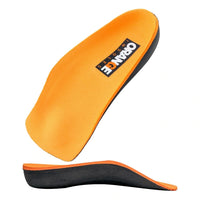
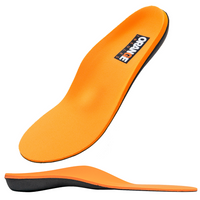
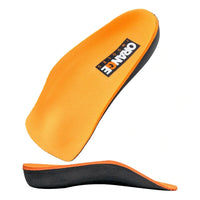
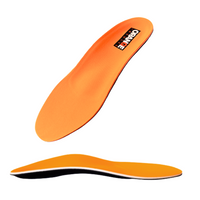
To figure out which insole is right to adjust the fit, always start with the liner check. Pull the factory liner out of your boot and see exactly what kind of room is left inside. Most heavy snow boots have thick, easily removable factory inserts. Removing these gives you plenty of extra depth. This much open room points directly to Orange Full Length Insoles. They fill the available space perfectly and keep your foot completely stable on thin-sock days. If your boots have a narrower profile or limited interior depth after removing the factory liner, Orange Sport is a great alternative. Its thinner, athletic design provides structured support and responsive O-FOAM cushioning without taking up as much room inside your boots.
Glued-In Footbeds Point to Orange Light
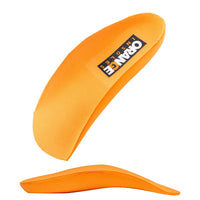
Some fashion-forward fall boots do not have a removable liner. The factory footbed is permanently glued down, leaving very little extra volume. A glued-in footbed points to Orange Light. This specific model gives you essential support without crowding your toes or making the boot feel uncomfortably tight. It fits easily over the existing footbed, taking up just enough space to secure your heel when wearing lighter socks.
Break-In Realities
People shopping for winter footwear often ask: do boots stretch? Leather boots will stretch slightly in width as they mold to your foot, and the upper will become softer over time. However, boots will never stretch in length. You should never buy a boot that crowds your toes hoping it will magically get longer. If your toes hit the front on day one, you absolutely need a larger size. It is perfectly normal to experience a short break-in period where stiff materials soften up. Wear your new boots around the house for short periods first so your feet can adjust. If significant foot pain persists long after the boot is fully broken in, it is always a smart idea to consult a medical professional. Learn more about this process in our advice on Why New Shoes Hurt Your Feet & How to Fix It.
Having the correct boot size is just the beginning of your journey toward all-day comfort. The real test comes every time the temperature swings and you switch between thick wool socks and thin everyday ones, because a boot that fit perfectly in November can suddenly feel loose by February. Instead of buying a second pair of boots for every sock thickness, let the right insole do that adjusting for you. Pull the factory liner, check how much room is actually left, and match it to the model built for that space. If you are struggling with a loose fit on thin-sock days, dealing with a heel that lifts more than it should, or simply want better support for your active lifestyle all winter long, an insole might be exactly what you need. Take a look at our Insole Selector / Which Insole Is Best For You guide to find the perfect match for your footwear. Find relief today and get back to moving comfortably all season long.