

What's the difference between an insole, a heel cup, and one of those gel pads sold at the pharmacy?
An insole is a removable insert worn inside a shoe to provide cushioning, support, or both. Some insoles replace the shoe’s existing sock liner, while others sit on top of it. A pad does something smaller: it cushions, but it doesn't necessarily give support.
They solve problems at different scales. A pad targets one specific area, while an insole supports a larger portion of the foot.
Support Spreads Your Weight; Cushion Softens One Spot
The liner in many shoes is primarily a finishing and comfort layer. It is typically thin, relatively flat, and made from softer materials that provide limited structural support. That is most of what a shoe's own liner is doing, and why a pair that felt fine in the store feels flat by the end of a season.
Soft cushioning may provide immediate comfort, while a firmer structure is designed to provide support that holds its shape over longer periods of wear.
Key takeaway: Support changes how your weight is distributed across the foot. Cushion changes how one spot feels.
Heel Cups and Metatarsal Pads Answer Problems You Can Point To
Several shapes on a pharmacy shelf sit under one part of the foot and leave the rest as it was
.
-
A flat cushion: a full-shoe layer of foam or gel with no arch shape. It softens the whole layer underfoot without changing how weight spreads.
-
A heel cup: a contoured structure that cradles the heel to improve stability and help keep it positioned within the shoe.
Read more: The Power of a Deep Heel Cup.
-
A heel pad: a soft disc under the heel that absorbs impact there.
-
A metatarsal pad: a small raised pad positioned behind the ball of the foot that helps distribute pressure across the metatarsals.
A standalone pad may be useful when you want extra cushioning or pressure relief in one specific area, and the shoe otherwise provides adequate support. Persistent or recurring pain, however, may require a broader look at footwear, support, and the underlying cause.
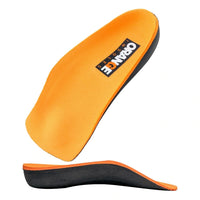
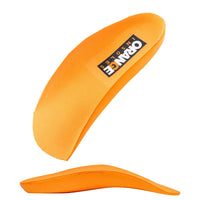
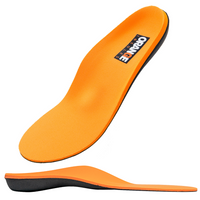
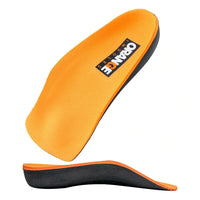
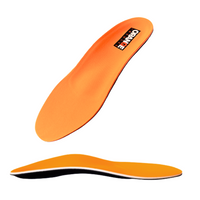
Worth checking before you buy a metatarsal pad separately: your insole may already have one built in. Both Orange Full and Orange 3/4 Insoles feature a metatarsal pad, deep heel cup, and medial arch support to help support the foot and maintain proper alignment. The primary difference between the two is fit. Orange Full is designed for shoes with removable liners, while Orange 3/4 provides the same supportive foundation in a shorter profile that works well in shoes where the existing liner stays in place.
Key takeaway: Pads target specific areas; insoles can provide broader support across the heel, arch, and forefoot.
Arch Support Does More Than Support Your Arch
For broader support, both three-quarter and full-length insoles support the heel and arch to help keep the foot properly aligned. The main difference between them is not the level of support, but how they fit in your shoes.
A three-quarter insole extends from the heel to just behind the ball of the foot, making it a good choice for shoes where the existing liner cannot be removed. A full-length insole extends through the entire shoe and is designed to replace a removable liner. In most cases, the amount of room in your shoe will determine which style is the better fit.
Unlike a pad that cushions one specific pressure point, a contoured insole combines a deep heel cup with structured arch support to help control foot motion, maintain alignment, and distribute pressure as you stand and move. If you are looking for support that addresses how your foot functions as a whole, rather than cushioning one isolated area, a three-quarter or full-length insole may be the better option.
A Custom Orthotic Is Built for One Person's Foot
Foot orthotics can be either prefabricated or custom-made. A custom orthotic is made for an individual, typically from measurements, a scan, or a mold of the foot, while an over-the-counter insole is manufactured in standard sizes and profiles.
For general support needs, over-the-counter insoles offer a readily available option. More complex structural or medical problems may require assessment by a podiatrist or another qualified healthcare professional.
Persistent or worsening pain, numbness or tingling, unexplained swelling, changes in foot shape, or difficulty walking are good reasons to speak with a podiatrist or other healthcare professional rather than relying on an insert alone.
Key takeaway: Off-the-shelf insoles and prescription orthotics differ in who they were made for. Persistent pain is a reason to get the foot looked at.
Quick Solutions Guide
What insole features do your feet and shoes need? We’ve listed a quick guide.
Looking for broader structural support? → Orange Full-length insole
Shoe has limited room? → Consider Orange Light insoles
Need more support for sports? → Orange Sport Insoles
Removable liner? → full-length replacement may fit
Shoe liner can’t be removed? → Orange ¾ insoles
Persistent/unexplained pain? → professional assessment
Each insole has its function, so it helps to get a specific kind that works for the shoes you are using.
Find the Support That Fits How You Spend Your Day
Finding the right support starts with matching the right shape to the shoes you already wear. A small pad can provide cushioning or pressure relief in a specific area, while a contoured insole supports the heel and arch to help maintain alignment throughout the day. Consider where you need support, how much room your shoes have, and how much time you spend on your feet when choosing the option that best fits your day.