
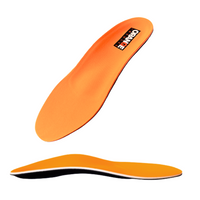

If you have flat feet and your feet start aching halfway through the day, the right insoles can make your shoes a lot more comfortable. The key is finding support that actually holds your foot instead of simply adding another layer of soft cushioning.
That is what Orange Insoles are designed to do. Each model combines firm arch support with a deep heel cup to help support your foot and distribute pressure more comfortably. The main question isn't whether you need the softest or firmest Orange Insole. It is which Orange model fits the shoes you actually wear.
For most people, that comes down to two things: how much room you have inside the shoe and what you do while wearing it.
What Should You Look for in Insoles for Flat Feet?
If you have flat feet, cushioning can certainly make a shoe feel softer. But cushioning alone doesn't provide much structure beneath your foot.
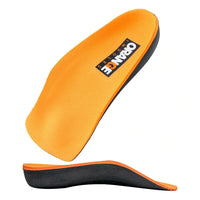
A supportive insole should give your arch a firm surface to rest against while helping stabilize your heel inside the shoe. That's why Orange Insoles focus on two features: firm arch support and a deep heel cup.
The firm contour supports the medial arch, which runs along the inside of your foot. Instead of simply compressing underneath you, it provides a supportive surface beneath the arch as you stand and move.
The heel cup surrounds and cradles the heel, helping keep it comfortably positioned over the insole. This combination helps distribute pressure across the foot rather than relying on cushioning alone.
And the materials have to be able to maintain that support. That's why the material matters as much as the contour. Orange Insoles are also built around a deep heel cup designed to cradle and support the heel.
There is an important distinction here. Insoles can support your feet, improve how your shoes feel, and help manage the stresses that come with spending time on your feet. They do not rebuild the structure of an adult flat foot. The goal is support and comfort, not changing the anatomy of your foot.
Which Orange Insole Is Best for Flat Feet?
The best Orange Insole for you depends largely on your shoes.
Before choosing one, look inside the pair you wear most. Is there a removable factory liner? Is the shoe relatively roomy, or does the top already fit snugly against your foot? Are you wearing running shoes, work boots, everyday sneakers, or dress shoes?
Those details tell you a lot about which Orange model will fit comfortably.
Orange Full: Start Here If Your Shoes Have Removable Liners
If your shoes have removable factory liners and enough room for a full-length replacement, Orange Full is a natural place to start.
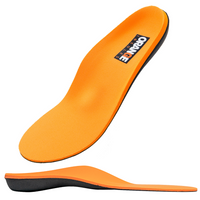
Take the existing liner out and put Orange Full in its place. You get support from the heel through the length of the shoe without simply stacking another full-length insole on top of the one already there.
This makes Orange Full a practical everyday option for many sneakers, casual shoes, and roomier footwear with removable liners.
Orange Light: For Shoes With Less Room
Some shoes simply don't give you much extra space.
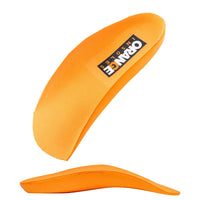
If the factory liner is glued down or the shoe already fits fairly snugly, Orange Light gives you a slimmer option. You can add Orange's arch and heel support without taking up as much space inside the shoe.
That can make it a better fit for lower-volume shoes where adding too much material under your foot would make the upper feel tight.
Orange 3/4: When You Need to Preserve Forefoot Room
Sometimes the problem isn't the support underneath your heel or arch. It's finding room for an insole without crowding your toes.
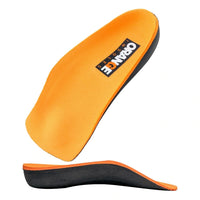
Orange 3/4 runs from the heel through the arch while leaving the forefoot area open. That lets you add support without putting another full layer underneath the front of your foot.
It can be especially useful in shoes where toe-box space is limited.
Once you've put an insole in, do a quick fit check. Your heel should stay comfortably in place, your toes should still have room, and the upper shouldn't press uncomfortably against the top of your foot.
Orange Sport for Running and Active Shoes
Running puts your feet through the same movements again and again, so you need support without making an athletic shoe feel crowded.
Orange Sport is designed with athletic footwear in mind, using a slimmer profile with arch and metatarsal support. If your feet only hurt in your running shoes, take a look at both the support inside the shoe and how much room you have before assuming you need an entirely different pair.
If you're deciding between two full-length options, choosing between Sport and Full comes down to the footwear and activities you plan to use them for.
What About Flat Feet in Work Boots?
If you spend eight or ten hours standing or walking at work, your work shoes may be the most important pair to support.
Many work boots provide more interior room than everyday shoes, but steel-toe footwear creates another problem: you don't want an insole taking away valuable space around your toes.
That's the trick with fitting insoles into steel-toe boots. If a full-length insole makes the toe area feel crowded, Orange 3/4 can provide heel and arch support while leaving the forefoot open.
And don't forget about the shoes you wear outside work and exercise. Your everyday footwear matters too. Even sandals can be part of the picture, although people with flat feet should be selective about the sandals and flip-flops they wear.
Give Your Feet Some Time to Adjust
Firm support can feel different if you're used to flat factory liners or very soft insoles.
You may notice the arch underneath your foot at first. Instead of going immediately from no support to wearing your new insoles through a full work shift or long run, start with shorter periods and give yourself time to get used to them.
Some awareness of the new support is different from pain. If an insole is causing pain, or foot pain continues despite supportive footwear, it is worth talking with a podiatrist or another qualified healthcare professional.
The same goes for persistent or recurring heel pain, particularly pain that's noticeable when you first get out of bed. If that sounds familiar, our guide to the best insoles for plantar fasciitis explains what to look for.
Start With the Shoes You Wear Most
You don't necessarily need to solve every pair of shoes at once.
Start with the pair that's on your feet the longest. If you spend five days a week in work boots, start there. If you're in sneakers from morning until night, start with those. If running is when your feet bother you most, look at your running shoes first.
Then check the space inside.
A removable liner and enough room for a full-length replacement point you toward Orange Full. Athletic footwear may be better suited to Orange Sport. A snug shoe or glued-down liner can call for the slimmer Orange Light, while Orange 3/4 gives you another option when preserving forefoot space is especially important.
Flat feet don't need more complexity. They need comfortable, dependable support that actually fits inside the shoes you want to wear.
Start with the Orange Insoles fitting guide and match the right model to the pair you wear most.