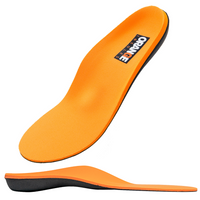
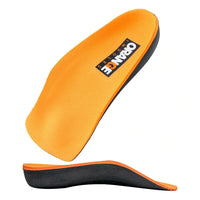

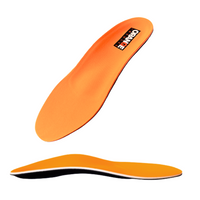

"Is it worth putting an insole in cleats my kid will outgrow by spring?" It usually is, though not for the reason most parents expect. A growing foot will likely outgrow the insole along with the cleats, so this is not a buy-it-once decision. It is worth it for this season: the cleats you just bought have growing room in them on purpose, and that room is where the heel slip and the week-two blisters come from.
Fall registration is when most cleats get bought, so sort this out before the first practice rather than after the third blister. Insoles tend to get filed as something older feet need, but the shape does the same job at 14 as it does at 40.
The Liner in a New Cleat Is a Spacer, Not Support
Start with one check: does the factory liner come out? When it does, what you pull out is a die-cut piece of foam a millimeter or two thick, there to cover the seams and the cleat plate. Put something back at a similar thickness and you add support without adding bulk. Plenty of cleats never give you that liner, either glued down or cut too close to trade up in thickness. That does not rule out an insole. It means you want the slimmest model rather than a full-length one.
Thin is the whole constraint either way. Cleat insoles run around 1.6mm at the forefoot for that reason. More volume than the shoe has to give lifts the foot, tightens the upper, and changes how the studs feel underfoot, the same low-profile math that applies in a cycling shoe.
Key takeaway: Whether the factory liner comes out decides which insole fits.
The Half Size You Bought for Growing Room Is Where the Blisters Come From
Growth room is the rational call for a foot that changes every season. The working guideline is a thumb's width, a quarter to a half inch, between the longest toe and the end of the cleat, checked standing. Past that, the extra length buys heel slip rather than another season: the heel lifts on every push-off and the foot slides forward on hard stops.
A thin supportive insole takes up that slack from underneath. The foot sits lower and more securely, the heel stops traveling, and toe room stays where you paid for it. Extra socks steal that toe room, and lacing tighter just presses on the top of the foot.
Key takeaway: Growth room is fine. An insole is how you fill it without giving up toe room.
Cleats Sit Flat, Which Is Why Heels Complain First
Running and training shoes lift the heel above the forefoot. Most cleats sit close to flat, which sends more load through the back of the foot and keeps the calf and Achilles under tension all practice.
In athletes roughly 7 to 15, the back of the heel bone still has a growth plate, an area of developing bone that has not fully hardened, and it is a common site of in-season heel pain, more so during a growth spurt. An insole does not prevent that. A deep heel cup and forefoot cushioning change how load is distributed, which is why the shape of the heel cup matters more than how soft an insole feels in your hand.
Heel pain that outlasts the weekend, or a limp after games, is worth a call to a pediatrician or podiatrist.
Key takeaway: A flat cleat concentrates load on the heel; a heel cup and cushioning redistribute it.
Cleat Geometry Decides the Insole, Not the Sport
Soccer cleats are the tightest case and the most common one: cut close, so the insole has to be the lowest profile that still has a real heel cup. Anything that adds volume gets the cleat laced tighter, and a tighter cleat rubs. Baseball and softball cleats have more room and a stiffer stud plate, so cushioning over the plate is what baseball players notice most. Football and lacrosse add hard lateral cutting, where holding the heel centered matters more than cushioning.
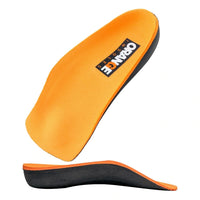
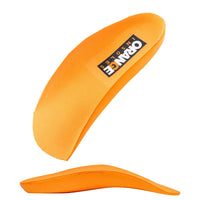
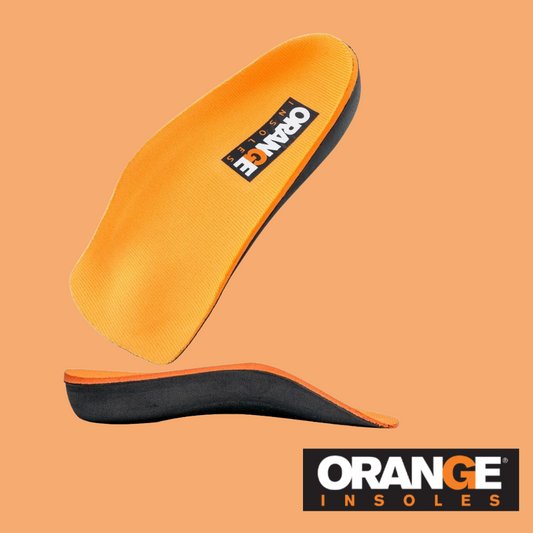
When the liner comes out and there is real space behind it, Orange Sport is the athlete model, built for what a sprinting, cutting foot puts through it. For tight cleats and the ones with no removable liner, the more common case, Orange Light is the slimmest model in the line and goes in without forcing the cleat tighter.
Key takeaway: Room in the cleat picks the model. Sport when the liner comes out, Light when it does not.
Check the Fit at the Start of Every Season, Not When They Complain
Check two things each preseason rather than one. A growing foot often means the next size up in cleats and in the insole, so check the insole against the foot before assuming it moves to the new pair. A flattened arch or cracking along the heel means it is finished regardless of size, and athletic shoes break down faster than most people expect.
The check takes two minutes. Stand them up in the cleats, thumb's width at the front, and press the heel counter to see whether it holds its shape. The signs worth acting on: limping after games, and the same complaint at the same point in every practice. Those are fit and load, not toughness.
Key takeaway: Fit changes between seasons even when the cleat still fits. Check both halves in August.
You Will Know Inside a Week Whether Fit Was the Problem
Cleats are a seasonal purchase and every sports parent has made peace with that. For a growing foot, the insole is much the same. What it buys is the season you already paid for, minus the week-two blisters and the sloppy-on-cuts complaint. Pull the factory liner before the first practice, or fit the slimmest model if it will not come out, and you will know inside a week whether fit was the problem all along.
Get Them Through the Season Comfortable
A comfortable season comes down to the right insole in the right shoe, and a cleat is its own case. Not sure which model belongs in one? This guide walks through the Orange line by activity and by how much room the shoe has. Check the size range before you order.