
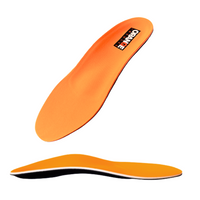

"Which insole should I get?" is the question we hear most. The answer usually comes down to three things: the shoes you wear, what you do in them, and whether those shoes have a removable liner. Get those three right and a well built insole does its job. Get one wrong, and it is usually the shoe, not the support.
Your Shoes, Your Activity, and Your Shoe's Fit Decide the Best Insole
The shoes you wear are the best place to start. Athletic shoes, work boots, dress shoes, hiking boots, and casual sneakers all have different amounts of space inside them. An insole that works perfectly in one shoe may not fit another, even on the same person. Space is a separate question from width — if your shoes feel tight across the ball of the foot rather than short, that is a width problem, not a room problem.
Next, think about what you do in those shoes. Standing through a ten hour shift places different demands on your feet than running, working out, hiking, or walking around town. The right support should match how you use your shoes every day.
Finally, check whether the shoe has a removable liner. Shoes with removable liners usually have enough room for a full length supportive insole. Shoes without one often need a lower profile option to avoid making the fit too tight.
This is why Orange Insoles offers four options.
-
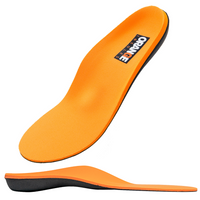
Orange Full is designed for work, walking, standing, and everyday footwear with removable liners.
-
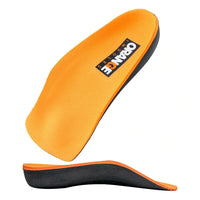
Orange Sport provides the same proven support in a design built specifically for athletic shoes, running, training, and other high movement activities.
-
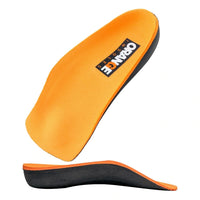
Orange 3/4 delivers the same heel and arch support in a shorter design that fits many shoes without removable liners.
-
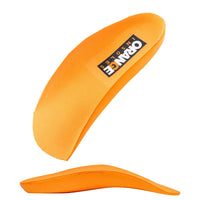
Orange Light provides moderate support for low profile shoes, flats, heels, cleats, and other footwear with very limited room.
Key takeaway: Start with the shoes you wear most, consider what you do in them, then choose the insole that fits your shoe.
The Right Insole Depends on What You Do All Day
On your feet all day. Retail, nursing and warehouse work need support that is still there at the end of a shift, and the shoe matters as much as the insole. It helps to know what to look for in footwear for standing all day.
Work boots. Boots run deep, so a full-length insole with a firm shell (the rigid layer that holds the insole's shape under load) usually fits. Safety-toe boots are the exception, because the cap limits height at the front of the foot. Getting comfort in a steel-toe boot without losing toe room is its own problem.
Running and field sports. Impact is higher and the foot travels through more of its range, so the insole has to hold arch position without feeling stiff at push-off. That is what Orange Sport is built for.
Plantar fasciitis and heel pain. The plantar fascia (the thick band along the bottom of your foot) is a tension structure, so relief comes from holding the arch up rather than padding the heel — which is why firm support beats soft cushioning here.
Flat feet and high arches. Flat feet need a shell that resists collapse, not softness that gives way with it. High arches need even contact along the arch; more cushion just leaves the same two pressure points doing the work.
Dress shoes and slim footwear. Slim, close-fitting shoes are where most insoles fail, and the fix is thickness rather than support: a slim insole can carry a real arch shape as long as it does not lift your heel out. Fitting insoles into dress shoes has its own rules.
Hiking and trail. Descents load the forefoot repeatedly and feet swell over a long day, so heel hold matters more than plushness.
Key takeaway: The use case sets the priority; the shoes you wear and whether their liner comes out still decide which version you buy.
Start With the Shoes You Wear Most
Most people have one pair of shoes that carries the bulk of their week, whether that means work boots, athletic shoes, walking shoes, or the everyday pair by the door. Start there.
Think about what you do in those shoes, then check whether the original liner can be removed. That will help determine whether you need a full length option such as Orange Full or Orange Sport, or a lower profile option such as Orange 3/4 or Orange Light.
Find the Support That Fits Your Week
The best insole is not simply the softest one or the thickest one. An inexpensive foam insert feels plush in the store and packs out within weeks, because foam alone cannot hold a shape under repeated load — a structured insole costs more because a shell does the work and the foam only cushions it. It is the one that matches your activity, fits properly inside your shoes, and continues providing support in month six as well as on day one.
For work, walking, standing, and everyday use, Orange Full is often the best place to start. For running, workouts, athletic shoes, and higher movement activities, Orange Sport is designed for the job. The Orange Sport and Orange Full comparison can help you decide between the two most common full length options.
Choose the pair that fits the shoes you rely on most, then build from there.