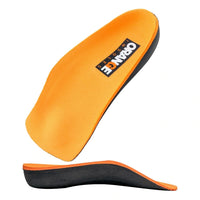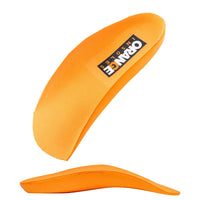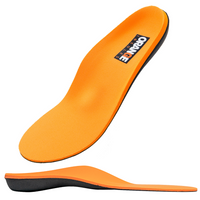
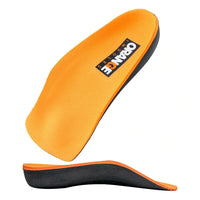

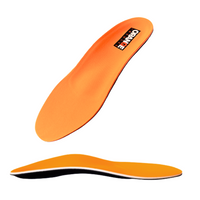

A pedometer study published in MEDSURG Nursing found that nurses on adult medical-surgical units cover almost 9,000 steps, or over four miles, in a single 12-hour shift. For that much time on your feet, the type of insole matters. Orange Full and Orange 3/4 feature a deep heel cup that helps stabilize the foot and absorb impact, making them the better choices for people who spend long shifts walking or standing. Just as importantly, the insole needs to fit properly inside the shoe without crowding the foot.
Orange Insoles covers the basic fit check in “Best Insoles for Standing All Day at Work”: remove the shoe’s existing liner and check how much room you have for an insole. Nursing footwear can make that more complicated. Many clogs and slip-on work shoes have built-in footbeds that aren’t removable, so adding an insole means working with the space already inside the shoe rather than simply replacing the original liner.
Many Nursing Clogs Have a Footbed That Does Not Come Out
Reach into the heel of the shoe and pull up on the footbed, the padded layer your foot rests on. If it lifts out, that space is what you have to work with. If it is glued or stitched down, anything you add sits on top of it, so it has to be slim.
Sealed footbeds are common in healthcare shoes because a one-piece interior wipes down easily and survives repeated cleaning. Anyone who has fitted shoes for a living checks this before talking about arches.
Four more checks on the clog you own:
-
How thick what came out was. A deep footbed leaves real room; a paper-thin one means the shoe was never carrying much support.
-
The heel counter, the stiff cup at the back of the shoe. Squeeze it: if it folds flat, nothing inside will hold your heel steady, and the shoe itself is what to fix first.
-
Open back or closed back. Adding height under the heel of a backless clog can let your heel lift out as you walk.
-
Toe box depth. If your toes already brush the top, a full-length insole will crowd them.
Healthcare workers often own two or three pairs that differ more than they look; check each before buying the same shoe inserts for all of them.
Key takeaway: Pull at the heel first. A footbed that stays put is not a dead end; it points to a slim insole.
Start With the Right Shoes, Then Choose the Right Insoles
For nurses spending most of a shift on their feet, our team recommends starting with a well-fitting running shoe. Running shoes offer a much wider range of support, cushioning, and fit options than many clogs and slip-on work shoes, making it easier to find a combination that works for both your foot and your insole.
From there, Orange Full or Orange 3/4 are the primary choices for long days of walking and standing. Both include the deep heel cup that Orange Insoles recommends as a key support feature for people who spend hours on their feet. Orange Full works especially well when the shoe has a removable liner that can be replaced, while Orange 3/4 leaves the forefoot open and can be a better option when you want to preserve room around the toes.
For a particularly narrow-fitting running shoe, Orange Sport is another option. Its narrower profile is designed to fit more easily in athletic footwear where a standard full-length insole may take up too much room.
Key takeaway: For long nursing shifts, start with a well-fitting running shoe and pair it with Orange Full or Orange 3/4 for support. If the shoe runs particularly narrow, consider Orange Sport instead.
But What If You Prefer Clogs or Crocs?
There is a reason clogs remain common on hospital floors. They are easy to slip on, and smooth, fluid-resistant uppers are much easier to wipe clean after the inevitable spills that come with healthcare work. If that practicality is important to you, you do not necessarily have to give up the option of using a supportive insole.
Instead, look for a professional clog with a removable footbed. The Birkenstock Super-Birki 2.0 is a good example. Its polyurethane upper is water- and dirt-repellent, and the cork footbed comes out. Birkenstock specifically notes that the removable design makes the clog suitable for people who use their own personal insoles.
That removable footbed also gives you the kind of space Orange Full needs. Orange Full is designed to replace a shoe's removable liner rather than stack on top of it. Remove the original footbed and check that the Orange Full sits securely without making the clog too tight or changing how your foot sits inside the shoe.
If you prefer a clog, this is the feature to look for: a removable footbed and enough interior depth for the replacement insole. A traditional molded clog with a fixed footbed gives you far fewer options because any additional insole has to sit on top of the existing footbed.
One caveat applies to certified work footwear: replacing the manufacturer's original footbed may affect the shoe's safety certification. Check the footwear manufacturer's instructions if your workplace requires certified occupational footwear.
Key takeaway: Running shoes give you the widest range of support, cushioning, and fit options, but clog lovers still have options. Choose a professional clog with a removable footbed and enough room to accommodate your Orange Insoles.
Three Twelves in a Row Wear an Insole Faster Than Five Eights
Break a new insole in over a few shorter shifts before wearing it through a full twelve. Your foot needs about a week to settle into the shape.
Alternating two pairs of work shoes lets the materials in both recover, which is most of the argument for a second pair. Work shoes lose their structure quietly, softening in the heel and midsole long before they look worn out.
Press your thumb into the arch of the insole. If the shell does not spring back, it has stopped holding its shape and it is time to replace it, whatever the calendar says.
Key takeaway: Rotate two pairs, break new insoles in gradually, and replace by feel rather than date.
Start With the Shoe You Already Own
Just remember, the right shoe may be the one you already have. Many shoes come with a basic liner designed more for cushioning and fit than meaningful arch support. Adding the right insole can make a significant difference by giving your existing shoes the structure and support they may be missing.
If the shoes already fit well, feel comfortable, and have enough room for the appropriate Orange Insole, you may not need to replace them at all—just give them better support from the inside.