
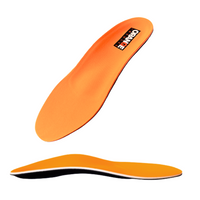

If your right foot is throbbing after a long shift but your left foot feels perfectly fine, you are probably asking yourself a very logical question. Do I just buy a leg length discrepancy insole for the shoe that hurts, or do I need one for both shoes? The answer is always both shoes. Putting an insert in only one shoe lifts one side of your body, alters your natural gait, and pushes all the impact stress straight up into your opposite knee and hip. Your feet might be complaining differently, but they still need a symmetrical foundation to keep moving comfortably with every step.
Why Does Only One Side Hurt?
Most people naturally favor a dominant side when they stand, walk, or carry heavy things. This means one foot works significantly harder than the other every single day. Old injuries also change how you walk and distribute your weight. If you sprained your ankle five years ago, your body might still be compensating by shifting your weight away from that side without you even realizing it.
Sometimes, you might actually have one foot flatter than the other. When one arch collapses slightly more than the opposite arch, that foot absorbs ground impact differently. This unequal stress is a very common reason for experiencing pain in one foot only. Your body is a highly connected chain, and a small imbalance at the bottom can create a loud, painful problem on just one side.
Is One Leg Actually Shorter Than the Other?
When pain strikes exclusively on one side, you might suspect you have one leg shorter than the other. A genuine structural difference in leg bone length is actually quite common. Studies show that up to 70 percent of the population has some degree of leg length discrepancy. However, for most people, the difference is so small it never causes a physical issue.
What often feels like a short leg is usually an alignment issue starting in your feet or hips. When one foot rolls inward more than the other, it drops your hip on that side, creating a functional difference rather than a true bone length difference. Read more about this in our article on What is Leg Length Discrepancy?. You might be searching for a shoe lift for leg length discrepancy, but a supportive pair of orthotics often resolves the uneven feeling by leveling out your base. If you struggle with pain higher up, see how this connection works in Hip Pain and Poor Alignment: It’s All Connected.
Why Both Shoes Need Symmetrical Support
If the pain is uneven, putting an orthotic in both shoes often feels counterintuitive. But fixing an uneven body requires an even, stable foundation. A single insole acts exactly like a wedge under one tire of your car. It throws off your entire alignment and changes how the machine operates. When you place the same supportive shape under both heels and arches, your body weight distributes evenly across both legs. Your hips level out, your knees track straight, and the overworked foot gets the immediate relief it needs.
When introducing new support to your shoes, your feet and legs need a few days to adjust to the corrected posture. Wear your new insoles for just a few hours a day to start, letting your muscles slowly adapt. If you have sharp, lingering pain that does not improve after a few weeks of adjustment, a doctor can help you rule out a more serious structural issue.
A Removable Factory Liner Points to an Orange Full or Orange Sport
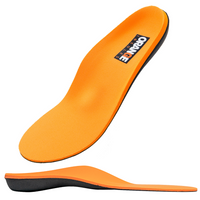
Since orthotics for leg length discrepancy and general alignment issues always need to go in both shoes, your choice depends entirely on the space available inside your footwear. Pull the factory footbed out of your work boot, running shoe, or hiking boot. If it comes out easily and leaves plenty of room, you want the Orange Full Length Insoles. These provide maximum support and shock absorption from heel to toe for spacious shoes.
If you are especially active or need extra cushioning for high-impact activities, swap that removable liner for the Orange Sport instead. Runners often struggle with one-sided pain, and you can learn more about protecting your joints in our guide to The Best Running Shoes For Hip Pain.
A Glued-In Liner Points to Orange Light or Orange 3/4
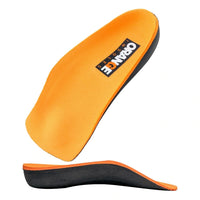
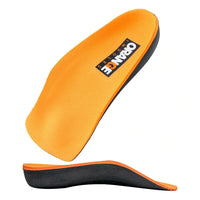
Not all shoes have removable factory liners, but that doesn't mean you have to sacrifice support. For standard footwear with a non-removable liner, the Orange 3/4 sits directly on top of the existing footbed, providing structured arch and heel support. Its shorter design is also ideal for wider feet or shoes with limited toe room, delivering support without crowding your toes.
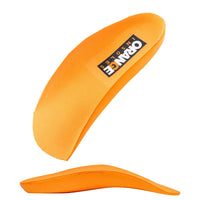
For slimmer footwear like dress shoes, flats, high heels, and cleats, the Orange Light offers a lower-profile solution. Its thinner design provides moderate support and comfort while taking up minimal space inside your shoes.
Get back to moving comfortably and stop letting one painful foot dictate your daily schedule. Once you know whether your favorite pair has a removable liner or a glued-in footbed, choosing the right model takes just a few minutes, and wearing the same supportive shape in both shoes gives your whole body the even foundation it has been missing. Find the lasting relief you deserve by building a solid, symmetrical foundation for all your favorite shoes, from your work boots to your weekend sneakers. Head over to our Insole Selector guide to find the exact pairing for your footwear, and get back on your feet today.