
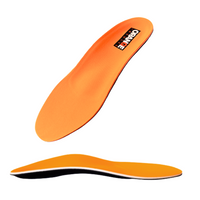

You are looking for the best insoles for concrete floors because your feet are completely exhausted after a long shift. A published occupational health study examining standing fatigue found that working on rigid concrete surfaces causes significantly more lower-limb discomfort than working on softer floors. The floor itself is the primary issue here. It is not just the length of your shift that wears your body down. This is a highly specific structural problem that differs greatly from the general foot fatigue we detail in our guide on Work Boots, Insoles, And You: Relieving Pain At Work. Standard work environments certainly cause general tiredness over time, but concrete aggressively breaks down the built-in cushioning inside your footwear. Concrete gives absolutely nothing back to you.
When dealing with foot pain from concrete floors, your very first instinct is probably to look for the softest and thickest cushion available. It makes perfect logical sense to want a fluffy pillow between your foot and that unforgiving hard ground. However, that incredibly soft foam is exactly what fails first during a heavy ten-hour shift. Materials scientists refer to this breakdown as a compression set. A compression set happens when a soft material is squeezed repeatedly under your body weight and eventually loses its natural ability to bounce back to its original shape.
Soft foam inserts might feel wonderful during the first hour of your morning shift. By hour four, that inexpensive foam has compressed deeply under your constant body weight. By hour nine, the foam is completely flattened out, and you are essentially standing directly on the hard factory floor all over again. To stay comfortable and keep moving throughout a very long day, you actually need structured support that maintains its shape permanently. A deep heel cup securely holds your heel in an optimal position for shock absorption. A firm arch support ensures your foot does not flatten out under constant load. Solid structure is what actually lasts the entire shift and provides genuine relief for your feet, legs, and back.
Finding the correct structural support for your particular job depends entirely on the type of footwear you wear to work. You should begin by pulling the factory liner completely out of your boot or shoe to see exactly how much room is left inside. That remaining interior volume determines which specific Orange Insole model will effectively help you do more and feel better at work.
A Removable Liner Points to Orange Full
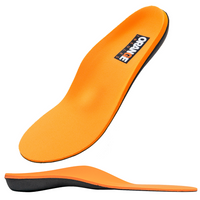
If your work boots or safety shoes have a removable factory liner, the Orange Full Length Insoles should be your first choice for long days standing or walking on concrete. Their deep heel cup helps stabilize your foot while maximizing natural shock absorption, and their rigid arch support helps maintain proper alignment as your feet fatigue throughout the workday. Whether you're wearing traditional work boots or athletic safety shoes, Orange Full provides the substantial support and cushioning you need to stay comfortable through demanding shifts. Simply remove the factory liner and replace it with Orange Full, provided your footwear has enough room to accommodate it.
When Space Is Limited, Orange Sport Is a Great Alternative
Not every work shoe has enough interior room to comfortably accommodate Orange Full. Some athletic safety shoes and streamlined work footwear have a lower profile, even after removing the factory liner. If Orange Full feels too bulky or creates unwanted pressure inside your shoe, the Orange Sport is an excellent alternative. Its slimmer athletic profile provides dependable support and cushioning while fitting more comfortably into footwear with limited interior space. Featuring our exclusive O-FOAM technology, Orange Sport also delivers exceptional durability and energy return for workers who spend their shifts constantly moving across concrete floors. The goal is to get the most supportive insole your footwear can comfortably accommodate, starting with Orange Full whenever possible.
A Glued-In Footbed Points to Orange 3/4
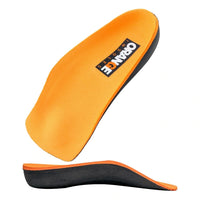
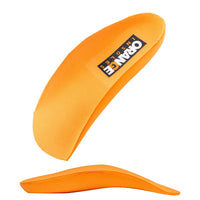
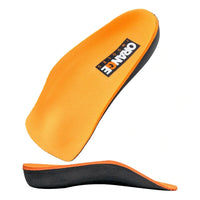
Sometimes your mandatory work footwear does not have a removable liner at all. If the factory footbed is glued firmly in place, or your shoes have limited room in the forefoot and toe box, the Orange 3/4 Insoles are an excellent solution. They deliver the same substantial arch and heel support as our Orange Full Length Insoles, but stop just behind the ball of your foot, leaving your toes plenty of room to move comfortably. This makes them a great choice for workers who spend long hours standing or walking on concrete floors and need dependable support without adding bulk to the toe box.
Finding the right support for your demanding work environment means you can finally stop thinking about your tired feet and get back to moving. Concrete is not going anywhere, and neither is the compression it quietly puts on soft foam every single shift, so the real fix is choosing structure before that breakdown even starts. You do not have to just accept daily aches and severe fatigue as a normal, unavoidable part of your job, and you should not have to replace your insoles every few months just to get through a shift that still feels supported by hour nine. Discover the perfect fit for your specific work boots or athletic safety shoes by visiting our Insole Selector guide today. Find relief today and give your feet the reliable structural support they truly deserve.